Weten Heqqide Qeside
Ehmet Igemberdi
Kettim ana, kettim yiraqqa,
Yurugumde jiq pighan qaldi.
Tirik turup koydum dozaqta,
Eytalmighan kop arman qaldi.
Bu ketkinim sendin renjishmu,
Ya seningdin bizar boup kettim?!
Shu suallar otse beshimdin,
Yurugumni ming pare ettim.
Shunga meni kechur jananim,
Jan-jigerim Uyghurstanim-
Sherqiy Turkistan-Wetinim Mening!
Men ketmidim yiraq ellerge,
Ejnebilik shohritini dep.
Ya bay bolmaq weswisi bilen,
Tinich sahil, yat makan izdep.
Guzelligi korunmidi hich,
Charbaghliri yat sahillarning.
Qandaqlarche terk etip Weten,
Bexti kulsun miskin dillarning?!
Sen ezeldin mening xumarim,
Gul diyarim Uyghurstanim-
Sherqiy Turkistan-Wetinim Mening!
Sening uchun seni terk ettim,
Rastin kettim qanliq yash tokup.
Xizmitingde bolay dep weten,
Shu mexsetni dillimgha pukup.
Oghlung bolup tughulup axir,
Bolalmisam derdingge dawa.
Keng baghringda erkin kulmisem,
Nime kerek bu rezil dunya?!
Seni kormek boldi gumanim,
“Elwida!” dep Uyghurstanim-
Sherqiy Turksitan –Wetinim Mening!
Ne qismettur putken zamane,
Eyatlmidim bexit koyini.
Ichelmidim yurek qan’ghidek,
Bashegimning* zumret suyini,
Tuprighingni, nomus-aringni,
Paklalmidim oz oghlung’gha xas.
Seni korup otning ichide,
Chette turup koygenligim rast.
Pelek xari - qachaqtur namim,
Kechur meni, Uyghurstanim-
Sherqiy Turkistan Wetinim Mening! (*Bashegim-yer ismi)
Botilaqtek yighlidim bozlap,
Yiraqlarda ah-zarim qaldi.
Qandaq qilay weten qulluqta,
Yureklirim hesrette yandi.
Nege barsam dert-elem yoldash,
Wetensizning jeni yoq iken.
Bexitsizlik herdem sayidash,
Yoruq dunya-baghrimgha tiken.
Nedur Allah, putmes gunahim,
Boldum ada Uyghurstanim-
Sherqiy Turkistan – Wetinim Mening!
Eghir iken weten hesriti,
Zep tugumes judaliq chushti…..
Qelbim yighlar oylisam elni,
Tagh –cholliri kozimdin uchti…..
Eghir iken “Hijran”degen soz,
Basar dilni taghlar weznide,
Manga oxshash dertmen barmidu,
Sersan bolghan Weten derdide?!
Sen quwanchim, qayghum, azabim,
Dilyaramsen Uyghurstanim-
Sherqiy Turkistan – Wetinim Mening!
Bir er omri otti yiraqta,
Ketelmidim elim bar turup.
Namert dushmen meni qestleydu,
Qedimimge ming qiltaq qurup.
Shum dushmening peyili yawuzluq,
Insan emes, tulke neslidin.
U-qan icher, hozuri - zulmet,
Adaletni bilmes eslidin.
Ah, derdimge barmu shipahim,
Xeste janim- Uyghurstanim_
Sherqiy Turkistan - Wetinim Mening!
Lenet sanga, Beijingliq zalim-
Zulmet tunning pushti-panahi.
Seni boghar tokulgen qan-yash,
Shu Elimning qanliq qisasi.
Keler bir kun, bir heqiqet bar:
Qisas oti ochup qalmighan.
Uyghur emes, unutma ewlat,
Basqunchidin och alalmighan!
Duayimda tileymen da’im,
Sanga mertlik, Uyhgurstanim-
Sherqiy Turkistan – Wetinim Mening!
Bulap aldi bar bisatingni,
Nimeng qaldi endi Uyghurum?
Qeni erking, kengri asmaning?
Qepez ichire qalding qorghuyum.
Qepezni chaq, bu Tengri heqqi:
Senmu tapqin horlik, adalet!
Tar qepezge bende bolghandin,
Erkinlikte olgenmu rahet!
Xar bolmisun nomus hem arim,
Sen pexrimsen Uyghurstanim-
Sherqiy Turkistan – Wetinim Mening!
Zhongnanhaylik shu yawuz qawan,
Sorighangha bermes erkingni.
Bir Allahqa, ozeng’ge ishen,
Kuresh bilen koter qeddingni!
Musteqilliq, horlik En’guxter,
Kuresh bilen qolgha kelidu.
“Ozuq bermes, yat yol korsiter.”
“Is achighin turxun bilidu.”
Kuresh bilen kelmigen bexting,
Bolmas sening, Uyghurstanim-
Sherqiy Turkistan – Wetinim Mening!
Zaman zorning, pelek saxtikar,
Dushmen qebih,dostlar na ehli.
Yutmaq izder seni ejdarhar,
Ezeldin shu dushmenning qesti.
Baqma yawgha, sozliri yalghan,
“Minju”, “ Renchuan”,* tenglik degini.
Ejdadidin miras u qalghan,
Xu teteyning* quruq emchigi .
Bes yetidu aldan’ghanliring,
Segek bolghin Uyghurstanim-
Sherqiy Turksitanim - Wetinim Mening!
Yaki olum ya musteqilliq!
Erkinlikning bahasi qimmet!
Tilesh, zarlash bilen ketmeydu,
El beshidin bu zulmi kulpet!
Koz ungomda weten jenggahi…
Men bararmen hassamni tashlap.
Yalghuz emes, yenimgha elip,
Yigit bolghan newremni bashlap.
Hor-erkinlik-menzil-qararim,
Zerbedest bol, Uyghurstanim-
Sherqiy Turkistan - Wetinim Mening!
(*Minju, Renchuan-Xitayche insane heqliri) (*Xu tatai- Hujintao ning hotuni )
Sherlirim-yawgha atqan oq,
Satqunlargha sanchilghan xenjer.
Sherlirim dostqa yar bolup,
Puraq chachti misali enber.
Her sozimde heqni koylidim,
Bu zulumetlik qara yillarda.
Shu emesmu axir kutkunim,
Umit otin yaqtim dillargha.
Qelem, elem – mening qoralim,
Uyghrustan - ehdu peymanim,
Sherqiy Turkistan – Wetinim Mening!
Men bilimen menzilim uzaq,
Izitqular chiqar her yandin….
“Horlik!” degen tiltumarim bar,
Saqlar meni jinu shaitandin!
Yolenchigim millitim, xelqim,
Tengri teghim manga pasiban.
Kuresh qilghan millet olmeydu,
Oz erkini tapar her qachan!
Weten, Millet, Dinm-Imanim,
Bu shurarim Uyghurstanim-
Sherqiy Turkistan – Wetinim Mening!
Oz elimni qolumgha almay,
Yoqtur erkim, bextu iqbalim.
Xantengrining altun textide,
Oltarmastin ghazi Sultanim.
Weten, horlik-insanning bexti,
Insane barmu qalghan bi weten.
Weten - bexting, Weten-barlighing,
Ikki dunya Jenniti ishen!
Shunga bolsun pida ming janim,
Tenim-janim Uyghurstanim-
Sherqiy Turkistan – Wetinim Mening!
Shunga mangdim ejdat yolidin,
Basqunchigha gor qazmaq bolup.
Chawisini yeyip dunyagha,
Heq darigha asmaqchi bolup.
Heq yolidin hergiz taymidim,
Musteqilliq boldi nishanim.
Bayrighmini yatqa barmidm,
Weten, Millet bolghach Imanim.
Bashta alghan shu taharitim,
Buzulmidi Uyghurstanim-
Sherqiy Turkistan – Wetinim Mening!
Rohim qushtek kokte perwazim,
Ger bolsammu bugun yetmishte.
Amanetke qalghan hayatim,
(U dunyagha bir kun ketmishte.)
Tughulmaq bar, olmeklik mutleq,
Teshwishim yoq olum wehmidin.
Ejrim bilen kutimen da’im,
Atar tangni zulumet keynidin!
Qachan keler illiq baharim,
Xelqim uchun Uyghurstanim-
Sherqiy Turkistan – Wetinim Mening!
Men olmeymen sen horlik deseng,
Mertler uchun oran*- awazim.
Sening otluq jenggahliringda,
Rohim yashnar, uluq ewladim!
Ghenimettur bu kunler manga,
Nepesingge hem nepes boldum.
Dert, hersriting men uchun qimmet,
Ishqing bilen shatliqqa toldum.
Bextiyar men, soydum diyarim,
Soygesh seni Uyghurstanim-
Sherqiy Turkistan – Wetinim Mening! (Oran*-- chaqiriq, shuar).
Sen yighlisang menmu yighlidim,
Shatliqinggha men boldum teshna.
Arman yoqti rast kulginingni,
Korup olsem, Weten jan Ana!
Kun pkirimde, tunler zikrimde,
Sen qelbimning kebiside sen.
Quyash kebi parlaysen bir kun,
Kelechekning wediside sen.
Inshaallah, keler dewranim,
Aman bolghin, Uyhgurstanim-
Sherqiy Turkistan – Wetinim Mening!
Ehmet Igemberdi
2007 – Yili, Mart Awestiraliye
Wednesday, July 18, 2007
Sherqiytürkistanda Axbarat We Neshriyatchiliq
Korash Atahan
Bügünki dunyada uçur almaşturuş işlirining tez tereqy qilişi şundaqla neşiryat ahbarat ixliriğa qolayliq şert şarait hazirlap béridiğan internetning keşip qilinişi qizil Xitay kommunistik hakimyitining Uygur xelqini menggu asarette qalduruştin ibaret rezil çüşini berbat qilip ularning mustemlikçilik we kengeymiçilik işliriğa tehdit élip keldi.
Uygur xelqi arisida yéqinqi yillardin buyan özining heq hoquqliri üstide oylinidiğan, dunya milletliri qatari erkin yaşaşqa intilidiğan démokratik idiyeler oturğa çiqip, türlik şekildiki musteqilliq herketliri arqa - arqidin yüz bérip kelgen idi.
Uygur xelqidek uzak tarix, özgiçe medeniyet we özige has diniy étiqad hem milly örpi adetke ige nopusi 20 milyondin aşidiğan bir itnik guropta tebe'i bolidiğan insaniy intilişlerning barliqqa kélişini, Uygur til yéziqi, diniy étiqad, neşriyat- ahbarat we radio- televiziyedin körgen Xitaylar özining zeherlik qolini uzaq yillardin béri az bolsimu xelqimizge meniwi ozuq bérip kéliwatqan neşriyat - ahbarat orunlirimizğa uzatti.Hazir wetinimiz Şerqiy Türkistanda bar bolğan neşriyat- ahbarat, radio- telveziye orunliri gerçe kommnist Xitay hakimiytining zorawanliq siyasitini teşwiq qilidiğan, yerlik itnik milletlerning mewjut bolup turuş hoquqini inkar qilidiğan, türlük betnamlar bilen diniy erkinlikni boğidiğan, yerlik milletlerning til yéziqi we mediniytini yoqutiwétiş üçün xizmet qilidiğan téroristik organlar bolsimu ular yene haterjem bolalmay yéngi - yéngi şumluqlarni oylap çiqip, milly haraktirimizni ajizlaşturuş, mediniytimizni weyran qiliş, til-yéziqimizni yoqutiwétiş jehetlerde wehşiyane herketlerni élip barmaqta.Men şu munasiwet bilen uzaq yil Xitayning Şerqiy Türkistandiki neşriyat- ahbarat saheside işligen bir wetendişimizni ziyaret qildim.
SUAL: Siz wetendiki çeğingizda Xitayning Şerqiy Türkistandiki neşriyat ahbarat saheside işleptikensiz bu rastmu?
JAWAP: rast.
SUAL: nimişqa wetenni taşlap çet’elge çiqtingiz?
JAWAP: men bir yazğuçi dunyaning weziyitini obdan çüşinimen. Wetende böliwatqan tengsizliklerge çidimidim, kommunist Xitay hakimiytining xelqimge qaratqan téroristik herketlirini dunya jamaetçilikige anglitiş arzusi bilen wetendin ayrilişqa mejbur boldum...
SUAL: Şerqiy Türkistanda nime xizmet bilen şuğullinattingiz?
JAWAP: Muherrirlik hizmiti belen şuğullinattim.
SUAL: Siz qandaq tengsizliklerni nezerde tutiwatisiz?
JAWAP: Ahbarat-neşriyat, radio- teliwiziye orunliri reyal turmuşning inkasi, u özi obiyekit qilğan rayondiki köp sanliq kişilerning menpe’etige wekillik qilişi kérek.méning wetinim gerçe Xitay faşistliri mustemlike qiliwalğan rayon bolsimu Xitaylar dunya xelqining közini buyaş üçün bu yerde aptonomiya siyasitini yolğa qoyğan idi. Undaq bolğan ıken heqiqi türdiki aptonomoya siyasiti yurguzilişi kérek idi, emilyet undaq bolmidi, til yéziqimiz çetke qeqildi yaki körniştiki nersige aylandurup qoyuldi; normal diniy étiqad erkinligimiz boğuldi, yaki din faşistik hakimyetning menpeeti üçün xizmet qilduruldi; milli maaripimiz weyrançiliqqa uçridi, yaki Xitayning asimilatsiye qiliwétiş siyasiti üçün xizmet qilduruldi. Iqtisadiy jehette arqida qaldurulduq yaki teb'i bayliqlirimiz talan - taraj qilindi; hotun- qizlirimiz terbiysiz qalduruldi yaki işsizliq we namratliq tüpeylidin ayaq asti qilindi; téhi bu yetmigendek ular nomussizlarçe Xelqaradiki tughum konturuli atmospurasini bahane qilip nopusimizning normal köpiyelmesliktin ibaret qirğinçiliqni keltürüp çiqardi.
Balilirimizning ey boluş nisbiti atom sinaq qiliş, özuqluk yétişmeslik, yoqumluq késel, dawalitişqa pul bolmasliq, dohturhanilarda türlik tejirbilerge materyal boluş, tuğuluşqa az qalğanda qesten çüşürüwétilip organizimlirini sétiş, téhi yoruq dunya körmigen buwaqlarning qimmetlik ezalirini isil tamaq qatareda yiyilidiğan özuqluqqa aylanduruwétiş…qatarliq usullar bilen nopusimizning éşiş derijisini dunyaning herqandaq yeridikige nisbiten zor derijide töwenlitiwetti..Yesli terbiysini alğan balilarning başlanğuç terbiyesige ige bolişi, başlanğuçni pütküzgenlerning ottura mekteplerge, ottura mekteplerni pütküzgenlerning aliy mekteplerge, aliy mekteplerni pütküzgenlerning xizmetke kirişi bes muşkul bolup bala terbiyelep qatarğa qoşuş xelqimiz beşiha bala boldi. Déhqanlar türlük heqsiz haşar we alwang yasaq derdidin halidin ketti, biz bularni ahbarat neşiryat wastiliri arqiliq xelqara jamaetçilikke uhturalmiduq, erzimizni atalmiş qizil Xitay hakimiytige anglitalmiduq, öz köz qaraşlirimiz kiçikkine bolsimu ekis etken ahbarat, edebiyat - senet, we siyasiğa ayit maqalilirimizni az bolsimu neşir qilalmiduq. Yazğuçilarning normal qelem tewritişige qattiq çek qoyuldi, undaq qilğanlar çiqip qalsa türlik yaman qalpaqlar keygüzilip türmige solandi, qestlep öltürüldi, sarang qiliwétildi mana bu tengsizlik bolmay nime?!
SOAL: anglisaq Uygurçe kitaplarni neşir qilmaq bekla teslişip ketti deydu rastmu? emiliyette çiqiwatqan kitaplar xéli köpken bu qandaq gep?
JAWAP: rast .Uygurçe kitaplarning xéli köp çiqiwatqanliğimu rast biraq u kitaplarning 95% tige kommunistik Xitay hakimiyitining tarixni burmilaş, milletni yoqitiwétiş, diniy étiqad erkinlikke yol qoymasliq, neşiriyat- ahbarat erkinligini çekleş, demokrattik pikirlerni basturuş, Uygurlar nopusning köpiyişining aldini éliş, türlük ussullar bilen ğeripçe pikir eqimining yamrap ketişining aldini éliş, Xitay medeniyitini perdazlap körsütüp xelqara jamaetçilikni we Uygur qatarliq yerlik Türkiy xelqlerni aldaş qatarliq rezil idiyliri singgen. Biz adette özimizge kéreklik kitap-jornallarni, gezit we teşwiqat materyallirini çiqiralmaymiz. Adettiki neşir qilinidiğan materyallarmu Xitaylarning qattiq tekşurişidin otidu.
SUAL:Uygurçe materiyallarni Xitaylar qaysi usulda tekşüreleydu?
JAWAP: u bek asan, ilgiri Uygurlarning téhi közi eçilmiğan çağlarda zeherlik sotsialistik eqidiler bilen bizni aldap, iqtidarliqlirimizni pepilep özi uqun xizmet qildurğan bolsa zaman özgergendin kéyin xelqimiz içidiki hulqi yumşaq, Xitay mekteplerde oquğan yaki Xitayğa mail iqtidarsiz kişilerni izlep tépip, ularni pul we hoquq bilen sétiwélip, şundaqla türlük siyasi otkemilerdin ötküzüp öz eqidisidin yatlaşqan, hükümran millet üçün qulçiliq qilidiğan bir Türküm ğalçilarni yitişturup işqa salidu.téhi ular xizmet bijirgende Xitaylardinmu aşuriwetidu. U yarimas insanlarning birdin bir alahidiligi şu bolğaçqa purset kelsila qerindaşliriğa qattiq özini korsitip eqeliy bolidiğan eserlerdinmu qusur izleydu. Nöwiti kelgeçke şunimu qisturup otey: Xitay jemiyiti uzliksiz tereqqi qilip özlirining muşu dewirde bésip otuşke tigişlik tereqqiyat yoloni tamamlawatidu, öz xelqini qudret tapquzuş yolida izliniwatidu, yéngiliqqa intiliwatidu, şu seweptin neşiriyat- ahbarat sahesidimu melum yéngi dewirge mas kélidiğan seyasetlerni tüzüp özi üçün xizmet qilduriwatidu. Ularning özliri üçün tüzgen siyasetlerni melum nisbette xelqimiz üçün xizmet qildurğilimu bolatti, bizdiki Uygurlarğa wekil bolup çong kiçik menseplerge qoyulğanlarning beziliri öz xelqige jan köydirişni xalimaydu, bezilliri bekla bilimsiz aq qarini periq etelmeydu, beziliri horun türlik medinyet bilimlirini, xelqara çong weziyetni we Xitay hökümitining siyasetliridiki biz üçün paydiliq hem paydisiz bolğan ajizliqlarni çuşenmeydu, yaki bolmisa çiwinning qulqidek hoquqidin ayrilip qéliştin ensirep tohu yüreklik qilip, medinyet tereqiyatimizğa putlikaşang bolidu. Yaki ğalçiliq qilipmu Xitayğa yahşiçaq bolalmaydu, yaki bolmisa milletning şu orundiki wekili boluşni qamlaşturalmaydu. Mundaq bir hikayini sözlep berey: Bir küni men bir yaş yazğuçining özem neşirge teyyarliğan kitapini melum bir kiçik işhanining mes'ulining yéniğa testiqlitiş üçün élip kirdim, eser nahayiti yahşi idi. Biraq xéliqi nadan “ bu bala bek yaş iken, esirini çiqirişqa aldirimayli, téhi resiminimu beremtingiz, taza kulkilik iş de bu 30 yaşqa kelgen soymilarning kitapiğa resimlirini bergili tursaq 50-60 yaşqa kirgenlerningkini qandaq qilimiz“ dédi. Emelyette Xitaylar yaşlarning eserliride démokratik idiyler köp dep qarap, neşir qilişni ançe halap ketmeydu. Ular esli hazir yétişip çiqiwatqan yaşlardin nahayiti çong umitlerni kütken, çonglirini bir nersilerni qilip yoqattuq, kiçikliri biz üçün xizmet qilidu dep çöçirini ham saniğan idi. Ular bügünki dewirdiki yaşlarni körüp özlirining çotni xata soqqanliğini bilip yetken bolsa kérek zeherhendilikining tiğ uçini yaşlarğa qaratti. Biz bir qançe yil tirişçanliq körsütüp yurup ming teste yaşlarning bir qisim eserlirini azraq bolsimu çiqiralaydiğan bolduq. Undaq kişilerning bizge tepip béridiğan her bir awariçiliqi Xitaylarni héçqandaq bedel toletmeyla mehsetlirige yetküzidu, kişilerning kallisini qandaq qilip özgertip özi üçün eşundaq hudini yoqatqan halda xizmetke salğili bolidiğanliği kişige sir bolup tuyilidu. Yene bir qétim bir yazğuçining esirini birqançe otkeldin saq salamet ötküzüp bir başliqning yeniğa élip kirsem buningda erkin muhebbetlişiştin ibaret ğeripning burjaçe erkinleştutruş iddiyesi bar iken, neşir qilğili bolmaydu, dédi. Emiliyette u eserde Uygur yaşlirining kommnist Xitay hakimiyitining Uygurlarni yoqitiwitiştin ibaret téroristik siyasetlirige bolğan isyankarliq royi ekis atturulgen idi. Ular özlirining menpeti üçün aqni qara qarini aq dep adetlengen.Yane bir parçe çong tuptiki esernı pilanğa yollap, 6 ay tehrirlikini qilip testiqlatqili kirsem birsi u başliqqa körset deydu birsi bu başliqqa körset deydu, axiri hemmisi meslehetleşkendek eserde milliy bölgünçilik idiyesi bar iken. Sawut damollamning obrazi ijabi qehriman qilip teswirlinip qaptu, Uygurlarning ezeldin doliti bolup baqmiğan tursa, dölet qurğan qilip teswirligen qandaq gep dep testiqlimidi. Radio teliweziye orunlirida bolsa Xitayning bu xil bésimi téhimu éğir. Hökümet Uygurlarning menpetige ayit jamiyetning qarangğu tereplirini ekis atturidiğan temidiki eserlerni işligili qoyuş uyaqta tursun hetta bezi çağlarda Uygur, Türk, milliy maarip, Şerqiy Türkistan digendek sözlerni işlitişkimu yol qoymaydu. Uygurlarning işligen her bir kiçik programmilirinimu qattiq tekşureydu. Eger Uygurlar işligen herqandaq filimde undaq atalğular bilip- bilmey tilğa elinip qalidiğan bolsa filim işliguçi qolğa élinidu yaki xizmettin tohtutulidu, şu orunğa mesul hadimlar emilidin élip taşlinidu, qattiq jazalinidu, hetta işligen filimida milliy hessiyat qoyuqken depmu bu kişige ohşimiğan derijide jaza bérilidu. Ahbarat peqet Xitayning mustebitligi, yerlik milletlerni medinyet jehetttin arqida qalduruş; asimilatsiye qiliş qatarliqlar üçün xizmet qilsila bolidu, uningdin başqa adette çingraq tinğilimu qoymaydu. Bu addiğina misallardin Xitaylarning Şerqi Türkistanda neşriyat we ahbarat saheside yolğa qoyiwatqan meniwiy jehettiki téroristik siyasitini xéli derijide çuşiniwalğili bolidu.
SUAL: Şerqiy Türkistanda hazir Uygur tilida kitap we gezit-jornal çiqiridiğan qançe orun bar? yiliğa qançe hil kitap we gezit jornal çiqiridu? ularda qaçilik Uygur xizmet qilidu?
JAWAP:neşriyatlar on’ğa yetmeydu, her bir welayette birdin jornal we gezit çiqirilidu ( Qazaq, Qirğiz tillirida kitap-jornal neşir qilidiğanlirimu şuning içide) lékin bu metbuat orunlirida asasliqi Xitay tilida kitap-jornal çiqirilidu. Bir yilda tehminen ming hilğa yéqin kitap we gezit-jornal neşir qilinidu.Uygurçe çiqidiğan gezit jornallar tehminen 30--40 % ni igilişi mumkin, bularni tepsiliy sözlep olturmisammu siz bilisiz.asasliq başqurğuçi orunlarning hemmini Xitaylar igelliwalğan, melum bir çong neşriyatni misalğa alsaq uningda 500 ge yéqin adem işleydu, Uygur tehrir bolumide aran 47 neper muherrir işleydiken, buningdin metbuat orunliridiki Uygurlarning sanini qiyas qilğili bolidu.
SUAL: Şerqiy Türkistandiki Uygur tilida çiqidiğan ahbarat-neşriyat orunlirining iqtisadiy ahwali qandaq? xelqimiz qandaq kitaplarni yaqturidu?
JAWAP: Uygur tilida çiqidiğan metbuat orunlirining iqtisadiy ehwali tariximizdiki herqandaq çağdikige qariğanda intayin osal ehwqalğa çüşüp qaldi. Uygur millitining bügüngiçe mewjut bolup turişining asasliq seweplirining birini neşriyat-ahbarat orunliridiki Uygur tili medeniyat hadisisidin körgen Xitay mustebitliri yéqinqi bir qançe yildin buyan Uygur metbuat orunliriğa bolğan siyasiy bésimni hessilep aşuruştin başqa kitap we gezit-jornallarning sanini we sehipillirini atalmiş iqtisadiy we siyasiy seweplerge bağlap, kişini endişige salğudek derijide qisqartmaqta. Nurğun jornallar Xitay qesten keltürüp çiqarğan bay eldiki namratçiliq destidin tohtap ketti we tohtap kétiş aldida turiwatidu. Bezilirining sehipiliri hessilep qisqartilip ohşimiğan bir nersige aylandurulup qoyuldi. Neşriyatlar we gezit-jornal tehrir bolumliri éğir iqtisadiy qiyinçiliqqa duç keldi, Şerqiy Türkistandek tebe'i bayliqi köp, yerlik itnik milliti qedimiy we mediniyetlik bir elde tarixta korulup baqmiğan derijidiki mediniyet qirğinçiliqi yüz bériwatidu. Metbuat orunliri iqtisadiy qiyinçiliq destidin bar puliğa kitap çiqirip maaş tarqitişqimu amalsiz qeliwatidu. Melum bir neşriyatning xelqperwer bir mesuli atalmiş Uygur aptonum rayonning melum bir qorçaq hakimidin neşriyat üçün mebleğ soriğanda "kitap çiqirimiz dep aware bolup yürgiçe bergen maaşni hejlep yatsanglar bolmamdu, nime béşimizni ağritip kiliwerisiler"digen. Bilmigen kişige bu bir adettikiçe söz bolsimu bilgen kişige nisbiten bu bir qorqunçluq signal. Qarang bizning pisihik jehettiki ajiziliqimizni néme dégen biliwalğan? Biz hiyalimizda yoq yürgen bilen dunyağa nupus wabasi we qarnining açliqidin şekillinip qalğan ğayet zor istimal baziri arqiliq insaniyetke apet élip kelgen, özining eqil parasitige tayinip yaşaşni bilmey Uygurning mol tebi'i bayliqlirini talan taraj qiliş bedilige semirip, közlirige yağ tiqilip ketken bu tuğma eqli kemtuk milletning bizni tar yerge qistaş üçün baş qarurup tepip çiqqan atalmiş beş ming yilliq tarixidiki bu tunji keşpiyatini. Qarang! Insaniyetning behti üçün birer keşpiyatni yaritişqa musteqqil eqil parasiti yetmigen bu milletning, nupus jehettin özi bilen ruşen küç sélişturmisi hasil qilidiğan ajiz milletlerni qandaq şekiller bilen asimilatsiye qilip yoqutuwétişke işlep ketken kallisini. Zeminimizni aldi, tebi’i bayliqlirimizni talan taraj qildi, xelqimizni nadanliqta qaldurup iqtisadiy jehettin weyran qildi, diniy étiqadimizni suslaşturdi. Eemdi umu yetmigendek rohiy dunyayimizğa qiliwatqan bu tajawuzini tohtutuş kérek idi. Rast kitap materyallar Uygur tilida çiqmaydu emes çiqidu. Sanimu xéli bar, lékin yahşi kitaplarni yézişqa yaki terjime qilişqa yol qoymaydu. Tariximiz, diniy étiqadimiz we milliy medeniyitimizge ayit kitaplirimiz ming qétim taraşlinip, burmilinip özige layiqlasturulup yaki apturlarni tar yolğa qistaş arqiliq ijat qildurup héçnimige ohşimaydiğan nersige aylandurğandin kéyin neşir qilişqa yol qoyidu. Yene bezi çiqiwatqan kitaplarning waqti ötken.
SUAL: anglisaq BDT pen maarip teşkilatidin Uygurlarning maaripini we milliy medeniyitini qutuldurup qéliş üçün nurğun pul bériptu bu rasmu? bu pullarğa xéli köp kitap materyal neşir qilinğandu herqaçan?
JAWAP: rast, nahiti köp pul bergen iken, biraq uning bir qismi kitap-materyal neşir qiliş üçün işlitildi, qalğinni nimige işletkinini éniq bilmiduq. Bir qismiğa kitap neşir qilinğini bilen neşir qilinğan kitaplarning maarip we milliy medeniyitimizge héç paydisi bolmidi. Buning sewepliri mundaq.1) Bu pullar bilen hökümet 80-yillarda neşir qilinip ketken eneniwi Uygur maaripi asasida tuzulup qalğan Uygur medeniyiti arqa körünuş qilinğan bir qeder yahşi dersliklerni Xitayning mustemlikiçilik siyasiti we Xitay medeniyiti arqa körüniş qilinğan kitaplarğa özgertip atalmiş Uygur "dersliklirini yéngilaş " pilani emelge aşuruldi. Asasiy pen kitapliri kona peti qeliwerdi.2) Bu pullar bilen Xitaylar özliri alla burun waz keçken, xelqarada "ötmes mata zorlap sata"ğa aylinip ketken kommunizimliq iddiyler bilen kişini qaymuqturidiğan Xitay yazğuçilirining atizim terbiyisi, sotsializim, kommnistik ehlaq we atalmiş milletler ittipaqliqi qatarliqlarğa ayit milletni ğeplette qalduridiğan siyasiy we edibiy kitaplar neşir qilindi. 3) Bu pullar bilen balilar we maaripqa héçqandaq alaqisi bolmiğan Xitay, Rus we Uygur yallanma yazğuçilirining Xitaydin bizge miras qalğan sotsiyalizim iddiysi singdurulgen "qizil qiya"; "qanatliq het"; "çeksiz ormanliq qarliq dala"; "Dongzi"; "pulat qandaq tawlandi"; "buran balliri"; "Qizil laçin"; Le Ping tağa"; "Ludungyi"; "pidakar su işliri mutehessisi Wang Wei" qatarliq ismini sanisimu ademning kongli élişidiğan insaniyet tepekkuriğa zit bir qatar bizni qulluqta qalduridiğan kitaplarni çiqardi.4) Bu pullar bilen yoqarqidek kitaplarni çiqirip, biçare mezlum xelqimizge zorlap sétip yiğqan pullarni belkim Qazaq, Qirğiz, Özbek, qatarliq biçare qerin daşlirimizni bizge qarşi sétiwélip, ular bilen wetenimiz we xelqimizning insaniy heq hoquqliri bolğan musteqilliq we horluk üçün koreşken şir yürek oğlanlirimizni qandaq qilip qirğin qiliş üstide tohtamlarni tuzgendu.5) Kitap materiyal neşir qilişqa ajritilğan pullarning köp qismi Xitay maaripini tereqqiy qilduruş üçün işlitiwelindi. Ular bir qisim yéngi derisliklerni neşir qiliwaldi, ariçiğa alte tayaq dep hemmidin ziyan tartqini Uygur milliti boldi. Qazaq, Mongğul, Qirğiz, Şiwe qatarliq mediniyette bir qeder arqida hesaplanğan milletler mehsetlik Uygurlarğa qarişi küç supitide tereqqiy qildurilidiğan bolğaçqa ularning bu pullarni işlitiş işliri Xitay hökümitining astirittin awaylap qomandanliq qilişi bilen bizningkidin éditliqraq boldi. Ular hazirğiçe ma'aripta qilalmay kelgen bir qisim işlirini qiliwaldi.
SUAL: xelqimiz qandaq kitaplarni yaqturup oquydu? neşir qiliniwatqan kitaplar bu hil ehtiyajni çanduralamdu? Uygurlarning kitap oquş qizğinliqiğa qandaq qaraysiz?
JAWAP: ejdatlirimizdin miras qalğan eneniwi tepekkurimizğa mas kélidiğan yéngiçe ma'aripimiz téhi güdek halitidila Xitay asaritige çüşüp qalğaçqa uningda özige has alayidilik we dunyawi zamaniwilik téhi şekillengini yoq. Maaripimiz intayin éhtiyajliq böliwatqan bilim igilirini Şerqiy Türkistanliqlarning emiliy yaşaş iqtidarini küçeytidiğan küç supitide nişanliq terbiyeleydiğan sestimiliq maarip nezeriyisini we yetekçi iddiysini iptidayi şekilde bolsimu barliqqa keltürelmiduq. (bunungda kommnist Xitay hökümitining hessisi bar elbette.) Bundaq bolğaçqa tuluq ottura, téhnikum, aliy tehnikum we aliy mekteplerde allaqaçan waqti otup ketken derislikler ötülidu, oqutuş usulliri hazirqi zaman xelqara weziyetke maslişalmaydu. Oquş pütküzgenlerning sewyisi özining milliy maarip en'enisi we milliy medeniyitige bir qeder mas kélidiğan mitotta tuzulgen ijtimayi penlerde bolupmu edebiyat, senet, tarix qatarliq penlerdiki sewiyesi dunyawi sewiyedin nahayiti yiraq bolsimu milliy medeniyitimizning başqa terkiwi qisimliriğa nisbeten bir qeder yoquri. Şundaq bolğaçqa kitaphanlarning mutleq köp qismining medeniyat sewiyisi ançe yoquri emes. Ular mustemlikiçilikning derdini yetküçe tartti, zamaniwi bilimlerni uguniştin nahayiti uzaq zaman mehrum qaldurulğaçqa hazirqi zaman dunya idilogiysi we zamaniwi penlirige ayit kitaplarni oquşqa ançe qiziqip ketmeydu. Ularning eng qiziqidiğini zulmet qaplap ketken rial hayatini birdem bolsimu untup, özlirining sunuq konglige teselliy isteş üçün kongluge birdin bir tesselli béridiğan islamğa , Uygur tarixiğa, Şerqiy Türkistan inqilawiğa we xelq eğiz edebiyatiğa ayit kitap materyallardur. Xelqimiz ilim sahesidiki éğir eqliy emgek telep qilidiğan temilarğa ayit kitap-materiyallarni oqumaydu yaki oquydiğanliri yoq hisapta. Bizde islam diniğa ayit her kim özi bilgençe şerhiylep baqqan, tariximizğa ayit köp burmilanğan Xitay we bir qisim Uygur ziyalilirining kitapliri köp neşir qilindi. Bularni oquş hazirqi zaman Uygurlirining "zamaniwi pen-tehnika "izdinişliri bolup qaldi. Lékin bundaq kitaplarning bir qeder bolidiğanlirini tapmaqmu asan emes, tapqan belenmu sétiwalalaydiğanlar nahayiti az sanni teşkil qilidu. Bezi kişilerning turmuştin eşininp az tula iqtisad qilğan puli siyasiy kitap matiryallarğa mejburi hetlinişke yetmeydu. Neşiryatlar hokometning başqa seliqliri yetmigendek xelqimizning béşiğa "kitap séliqi"ni muptila qildi. Ular pul tepiş üçün başqa yol tapalmay yene şu koturuşluk xelqimizni tapti. Xinjiang yaş - ösmürler neşriyati qatarliq bir qisim metbuat orunliri Xitayning mustemlike siyasetlirini teşwiq qilidiğan qurultay hojjetlerini, Xitay mustebitlirining hayati ekis etturulgen eserlerni, kommnistik iddiyiwiy ehlaq teşebbus qilinğan maqalilarni, atizim terbiysige ayit kişilerning diniy itiqadini zeherleydiğan neşir boyumlirini xelqimizning mejburiy sétiwélişi heqqide hökümetning namida qizil taşliq hojjet çiqirip jaylarda mejburi satti. Bu yerde zorul tépilip qalğaçqa bu hil " kiatap séliqi" keltürüp çiqarğan bir pajieni tilğa élip ötsem artuqçe ketmes dep qaraymen. Hotende bir déhqanning ikki balisi bar iken. Bir kuni melum bir neşriyat déhqanlarğa mejburi kitap sétiş üçün Hotenge keptu. Ular satqan kitaplarni almisa siyasiy jinayet bolidiken. xéliqi déhqan ikki balisini egeşturup bérip, yenidiki azraq pulğa baliliri yahşi körgen kitapni élip bériptu. Neççe kun otmeyla aka singil ikkeylen mekteptin kélip dadisiğa, muellimning 32 yuendin kitap materiyal puli élip kilişni eyitqanliğini deptu. Oyde pul yoq iken, u kişi pul ariyet élip turuş üçün barmiğan yeri qalmay aran digudek bir balisiğa yetkudek pul tepip kélip baliliriğa qattiq kayiptu we pulni yaşta çongraq bolğaçqa oğliğa bérip, qiziğa birelmeptu. Biçare güdek qiz kiçiçe yiğlap ming teste tangni atquzuptu. Singlisining eçinişliq yiğliğan yiğisiğa berdaşliq berelmigen xéliqi ösmür nahayiti parakende boptu. Ular ettigende mektepke mengiptu, mektep derwazisiğa barğanda ösmür yigit singlisiğa:
----- jenim singlim, bundaq qayğurma, me bu pulni oqutquçing´ğa bergin--deptu.singlisi bir tereptin heyran bolup, yene bir tereptin akisiğa koyinip:
----- aka sen işletkin, bu pulni men alsam sen qandaq qilisen--deptu. akisi gudeklik çiqip turğan sebiy közlirige yaş élip:
-----mendin haterjem bol, méning öydikilerdin hupiyane saqlap kéliwatqan azraq pulum bar idi, şuni bérimen deptu.Kiqik qiz huşalliqini basalmay akisining boyniğa esilip söyüp kétiptu we yügürgen peti sinipiğa kirip ketiptu. Emiliyette xéliqi ösmür balining yenida pul yoq iken. Singlisi kirip ketkendin kéyin, tebi’i bayliqliri Xitay teripidin talan taraj qiliniwatqan, dunya boyiçe eng bay döletke ayliniş ehtimali éniq bolğan bir elning bu biguna namrat perzenti mekteptin haliy bir jayni izdep tépip ésilip öliwaptu. Men bu weqeni anglap özemni tutalmay yiğlap kettim. Bu wetinimizde yüz bériwatqan pul we iqtisatqa bağlinişliq bolğan tümenligen pajialerning biri. Mana bu mustemlikiçilikning ewlatlirimizning beşiğa keltüriwatqan külpetliri, mana bu yerim esirdin buyan Xitay zeminiğa kéçe - kündüz toşulup kétiwatqan nefit we qimmetlik yer asti bayliqlirimizning bizge élip kelgen şapaiti, mana bu Şerqiy Tukistandiki bir çuka muz satidiğan manglur Xitayçilekmu puli yoq turup weten azat bolğandek terilirige patmay yaşawatqan Uygur baylirining yançuqiğa siğmay qéliwatqan nijis pulning hasiyiti, mana bu millitining insaniy heq hoquqlirini sétip milletning wekili boluş salayitige érişiwalğan qorçak hakimlarning bizge keltürgen şapaiti, mana bu buzuqçiliqa, zeherlik çekimlikke, haraq-şarapqa, qimar we türlik keypi sapalarğa bérilip ketken bir qisim baywetçilirimizning heyrihaliqi, mana bu 21- esirge saq-salamet ulişiwalğan mezlum xelqimizning ilim-pen sahesidiki kişini éçinduridiğan şum teğdiri. Muşundaq halettiki bir millette kitap oquş qizğinliqi yene qandaq bolmaqçi?! Muşundaq bir iqtisadiy jehettin talan taraj qilin'ğan, medeniyet jehettin weyran qiliwitilgen bir milletning ahbarat we neşriyatçiliq işliri qandaq bolmaqçi?! kişiler eng awal zağrada bolsimu uç wah qursaq toyğizişi kérek-de.
SUAL: wetinimiz Şerqiy Türkistanda hazirğiçe neşir qilinmay kéliwatqan isil eserler barmu? yana şundaq eserler yézilarmu?
JAWAP: Uygur xelqi 6 ming yilliq medeniyet tarixiğa ige qedimiy millet, buni dunya ilim sahesidikiler obdan bilidu. Biz şanliq medeniyitimiz bilen pehirlinişke tegişlik uluq milletlerning biri. Bundaq bir millette elbette nurğun mediniy, ilmiy miraslar bolidu. Lékin Xitay mustemlikisi içide yaşawatqan bizdin basqa xéli köp milletlerning ata-buwisi qongini eytip taşliwetken qeğezlirimu neşir qilinip boldi, biraq bizge ejdatlirimizdin miras qalğan neççe on ming parçe kitap Xitayning kitap turmiliride, çet’elning qarang'ğu kutuphanilirida, sawatsiz qaldurulğan xelqimizning quyaş nuri çuşmeydiğan qazinaqlirida héçqandaq qoğdaş tedbiri bolmiğan ehwal astida çirip ehletke aylinip barmaqta. Şerqiy Tukistanning qaysi bulingiğa barmang kona kitapqa putlişip yiqilip ketkili tas qalattingiz. Lékin Xitayning yerlik milletlerni medeniyette arqida qalduruş arqiliq yoqitiwétiştin ibaret tarixtiki bediwi milletlerning kitap köydirişidinmu neççe hesse éğir bolğan téroristik siyasetliri mediniyet miraslirimizning barğançe yoqulup ketişini keltürüp çiqarmaqta. Buningğa dunya jamaetçilikining diqqitini tartiş kérek. Weyran bolup ketiwatqan kitaplar ejdatlirimizning bizgila emes putkul insaniyetke qaldurğan bibaha soğiti.Sualingizning axirisiğa jawap bersem undaq kitaplar tohtimay yézilidu. Bezi qisqa waqitlarni hesapqa almiğanda Xitayning bizge uzliksiz zulum sélip kéliwatqiniğa ikki esir bolup qaldi. Bu jeryanda Nizari, Meşrep, Molla Musa Sayrami, Molla Bilal.... qatarliq buyuk ziyalilirimiz wujutqa çiqti we qimmetlik eserlirini qaldurup ketti. Uningdin kéyin Tejelliy, Qutluq Şewqi, Abduqadir Damolam, Abliz Mehsum, Abduhaliq Uyguri, Memtili Ependi... qatarliqlarni tikip osturgen bu millet Memtimin Buğra, Quddus Hujam Yarof, Ziya semidi, Turğun Almas, Abduşkur Memtimin, Murat Hemrayof... qatarliq buyuk alimlirimizni yetuşturup çiqti hem çiqiwatidu. Undaq asan iş yoq biz tarix sehnisidin yoqalmaymiz, xelqimiz téhi ejdatlirimizning izini bésip mangidiğan yéngi-yéngi turelmilerge hamildar bolmaqta. Xelqimiz hayatla bolidiken mediniyet işlirimiz we milliy musteqilliq koreşlirimiz tohtap qalmaydu.
SUAL: Şerqiy Türkistanda hazir bar bolğan ahbarat-neşriyat qoşunimizning milliy medeniyitimizni tereqqiy qilduruş jehettiki töhpisige qandaq qaraysiz ? milliy musteqilliq küreşlirimizdiki ularning orniğa qandaq baha bérisiz ?
JAWAP: meyli qehriman bolsun, yaki satqun bolsun, meyli adettiki kişi bolsun yaki bilimlik insan bolsun u eger Uygurla bölidiken yürikining şiwirlaşliriğa, we xelqining ingiraşliriğa qulaq sélişqa mejbur olidu. Inqilapçilar içidin satqunning, satqunlar içidin inqilapçilarning çiqip qélişini bir çetke qayrip qoyuşqa bolmaydu. Biz Uygur jemiyitide nahayiti pes körgen bir qisim kişilerning milliti üçün töhpe qoşiwatqanliqini, nayiti uluq bilgen bir qisim insanlarning milletke eytqusiz ziyan seliwatqanliqinimu korduq. Buning'ğa qariğanda ahbarat-neşriyat saheside işlewatqan kişilerning milliy medeniyitimiz üçün jan köydiriwatqanliri asasiy orunda turidu, biz bujehette Xitayğa qariğanda köp ewzellikke ige. Ularning konglini özimizge héç bir bedelsizla qaritalaymiz, buning özi bir ğelbe. Asan deyişimizdiki sewep ularning içide milliy hesiyati urğup turidiğan, millet dise nowiti kelgende jeninimu ayimaydiğan, kéçe-kunduz milletning ğemini qilidiğan, çiqiş yoli tapalmay tohtimay izliniwatqan, iqtidarliq we karğa kélidiğan kişiler 90% ni igileydu. Ular körünişte Xitay üçün işlewatqandek qilğan bilen emiliyette un tunsiz halda milliy menpetliri üçün küreş qiliwatidu. Ularning küçige sel qaraşqa qara-qoyuq hemmini bir tayaqta heydeşke bolmaydu.Eng addiysi ular Xitayning til yéziqimizni yoqitiwétiştin ibaret wehşi qara niyitige taqabil turup keldi. Milliy medeniyitimizni qoğdap qéliş jehette köp küç serip qiliwatidu we özlirining fonksiyunluq rolini jariy qilduriwatidu. Medeniyet jehette bek arqida qalğan millette milliy inqilapning ğelbe qilişi natayin. Neşriyat-ahbarat sahesidiki ziyalilirimizning inqilabimizğa obiyektip şert şarait hazirlaş jehettiki töhpilirige yoquri baha bériş kérek.Nesriyat-ahbarat sepidiki qerindaşlirimizğa Xitay hükümiti ezeldin işenmeslik, közge ilmasliq pözitsiyisini tutup kelgini yetmigendek emdi iqtisattin ibaret rezil közur bilen ularning kespiy işliriğa, a-iliwi turmuşiğa éğir qiyinçiliq keltürmekte. Bu bizge melum jehettin paydiliq Xitaylar ularning qimmitige sel qaridi, şunçe tirişipmu özlirige mayil qilalmidi. Hazir ularni Türküm-Türkümlep iş ornidin ayriwatidu we ayriş aldida turiwatidu.Ularning yahşi eserlerni neşir qilişiğa yol qoymayduyu kişiler burni quliqiğiçe toyup ketken siyasiy kitaplarni mejburi çiqarğuzup, uni sétip maaşingning 85% tini tap, bolmisa iş ornungni bikar qil dewatidu. Buningğa bir qisim herbiydin kesip almaşturğan we Xitay mekteplerde oquğan hoquq üçün, ailisining hatirjem turmuş keçurişi üçün milletni, millitning uluğwar menpeetini sétiwetidiğan munapiqlar yan tayaq bolup bériwatidu, hökümettin neşriyat-ahbarat işliri üçün bériliwatqan mebleğni teşebbuskarliq bilen tohtatquziwetip, xelqimizning kitaphumarliqidin ibaret artuqçiliqini Xitay üçün xizmet qildurup yerlik baylirimizning ikki tort tal puliğa tayinip kitap çiqartiwatidu. Mesilen, Şerqiy Türkistandiki melum bir neşriyatning adettiki bir xizmetçisi neşriyat-ahbarat sahesidiki Xitayğa putlikaşang böliwatqan bir qisim neşriyat hadimlirini qisqartiş, hökümettin pul almasliq, çiqiwatqan kitap-jornallarning sehipisini qisqartiş yaki tohtitiwétiş, kitaplarning sanini azaytiş, zorul tépilsa xelqning mebliği belen hökümetning siyasetlirini teşwiq qiliş jehettiki Xitayğa körsetken eqil- parasiti we bu jehette işligen emiliy xizmetliri hesabiğa neşeriyatning ezeldin yoquri sapaliq ziyalilarning basqurişida bolup kéliwatqanliğidin ibaret yahşi weziyetni özgertip bu orunning rehberlik salahiyitige érişiwaldi. Buning milliy medeniyitimizdiki çong bir tiradigiye bolğanliqini, xelqimiz uzaq otmey çuşunip qalidu.
SUAL: biz dayim çet'ellik dostlardin bizning uzaq tariximizğa, medeniyitimizge, qimmetlik asare etiqilirimizge, mol mediniy miraslirimizğa we özgiçe tağ deryalirimizğa qiziqidiğanliqini anglap turimiz, nemişqa şu heqtiki kitaplarni keng turde neşir qilip nowettiki iqtisadiy qiyinçiliqni yéngimaysiler?
JAWAP: bu sualni nahayiti yahşi soridingiz. Bizning taza şundaq qilğumiz bar. Lékin hemmidin qiziqarliqi özimizning ejdatliri qaldurup ketken mediniy miraslarğimu özimizning igidarçiliq qiliş hoquqimiz yoq. Bu gep yene ma'aripqa bérip çétilidu. Birinçidin yesli ma'aripidin tartip aliy mektep ma'aripiğiçe siz yuqarda tilğa alğan medeniyet hadisilirige çétilidiğan penlerge ayit bilimlerni balilirimizning yaş alahidilikke maslaşturup ügitip mangidiğan ma'arip systimisi yoq; ikkinçidin u nersilerni penler boyiçe ayrim-ayrim halda tetqiq qilidiğan ilim-pen muasselirimiz yoq; üçünçidin bu sahediki mutehesislirimiz kemçil; tortinçidin alimlirimizning bu heqte élip barğan tetqiqatliri Xitay hükümiti tereptin qattiq konturul qilinidu; beşinçidin nurğun tarixi miraslirimiz mustemlike halette bolğanliğimiz üçün bir qisim çet'el kutuphaniliri we muziyhaniliridin qayturup kélin'gini yoq; altinçidin nurğun mediniy yadigarliqlirimiz eslige keltüruş bahanasi bilen Xitay teripidin özgertilip kétiwatidu. (bunungğa addiy bir misalni korsitip otsem artuqçe ketmes: men 1998-yili idaridikiler bilen Turpanğa ziyaretke barğan idim. Idarining iqtisadiy qiyinçiliği bolğaçqa biz herqandaq bir medeniy yadikarliq ornining pulğa belet satidiğan rayoniğa kirelmiduq, içim aççiq boldi, özemning nersisidin eqelliy paydiliniş nöwiti kelgende paydilinalmidim, ziyaritimizning axirisida bizeklik ming oyini sirittin bolsimu körüuş pursiti kéliwatatti, biz u yerge barduq, méning tamaq yimisekmu yemey u yerni bir köriwalayli degen teliwim qara qosaq başliqimiz teripidin meshire bilen ret qilindi. Men bir usulni oylap taptim, qarisam çet'ellikler kirip kétiwétiptu, ularğa quşiliwalğim keldi, ular kelgende qoşulup kirdim, biz kirgen çağda qattiq nazaret qilinidiğan işikler çet'ellik dostlarni sahta, yasalma kulkiler bilen kütiwaldi, méning üstihan we tere renggim ularningkidin ançe periqlinip ketmigeçke menmu qizğin kütiwélindim we başqilarning diqqitinimu tartmidim.Biz hemme öylerni ziyaret qilduq, qizziq yéri özimizning medeniy yadigarliqimizni Engilizçe çüşendürüşke Uygurdin adem çiqmiğandek ademni yirgendüridiğan teleppuz bilen Engilizçini çala sözleydiğan bir manglur, tarixni 180 gradus burmilap, bu yerdiki mediniy miraslarni atalmiş qaysi sulali'lerdikidu Xitay senetkarlirining ijat qilğanliqini, Xitaylar bu ziminğa igidarçiliq qilmiğan dewirlerde yerlik xelqler teripidin weyran qiliwitilgenligini, özlirining buni qaytidin eslige keltüriwatqanliğini sözlidi, ğezeptin özemni öltüriwalğum keldi, aççiğimğa hay berdim. Ziyaret axirlaşti, basqilar çiqip kétiş üçün işikke qarap mang'ğanda méning ming teste kirgen bu yerdin ayrilğum kelmey hupiyane halda başqa terepke kettim, bulung tereptiki sim tartip qoyulğan "kirişke bolmaydu" dep Xitay we Engiliz tillirida tahtay ésip qoyulğan bir jayğa közum çühüp qaldi. Nimişqidu şeytinim u yerge qiziqturatti, men u terpke bardim we yéngidin eslige keltüriliwatqan bir öyge kirdim, kirsem bir Xitay qoloğa lapatkini tutup tamni qiriwatqan iken, kirginimni tuymidi, men unimgğa guman neziri bilen qarap turdum, u saqmusaq turğan bir resimning köz qismini qirğili turdi. Men özemni basalmay "néme iş qiliwatisen" dep soridim Xitay tilida. U qattiq çoçup ketti bolğay hoduqqinidin gep qilalmay qaldi, we Xitayçe bilidiğan bu "çet'ellik"ke heyran bolup qarap,"remont qiliwatimen" dep jawap berdi. Men "bundaq qilsang bolmaydu, "men Ürümçidin keldim, ahbarat ornida işleymen, bu işingni maqale qilip yézip ilan qiliwetsem qandaq qilisen?" dédim. U teste isige keldi we méning Uygurliqimni bilip yetti bolğay Xitayning Uygurlarğa qilidiğan körengligi bilen "boludu, yaz!" dédi tehdit arlaş. Men emdi özemdin ensirep qaldim, eger u mehpiyetligini saqlaş üçün meni öltürüp işik aldidiki yardin taşliwetse naheqtin naheq ölüp ketmey, buni Xitaylarmu qanat astiğa alidu, meni kim aqlap çiqidu dep oylap,"tohtap tur" dep qoyup yénip çiqtim, kiçikkinim üçün xéliqi ğalça başliqimning haywandek humuyişiğa qaldim. Eytay desem téhi, eytmay desem téhi, xizmetdaşlirimdin hökümetke çéqip qoyarmikin dep ensirep héçkişige eytalmidim. Uni yézip ilan qilmaqmu tes idi. Men bir Uygur alim bilen uçraşqanda bu weqeni sözlep bersem, u uliq kiçik tinip: "undaq işlarni az demsiz, bular kişilerdin hupiyane halda Xitaydin tépilğan medeniyet yadigarliqini Şerqiy Türkistanğa élip kélip komiwatidu, neççisi yerlik kişiler teripidin tutiwelindi, héliqi Xitayning dangliq tarixçisi, arhilogi Gomoroning 2 ming yil ilgiri yaşiğan Xitayçe şeir yazidiğan yalğan bir Uygur şaerni yasap çiqip Şerqiy Türkistanğa élip kélip Aksuning bir yézisiğa komdurup, neççe kündin kéyin kişilerni mejburi yiğip kélip, komgen nersini éçip ularni yalğan guwaliqqa tartip andin Xitayning ezeldin bu yerni başqurup kelgenligini ispatlimaqçi bolğanliğini, xélimu yahşi bir nerse yézip salmapsiz, yazğan bolsingiz hökümet bu çağqiçe ikki pütingizni bir ötekke tiqip bolatti"dédi.)Emdi öz gepimizge kelsek Xitay hükümiti Uygurlarning bu sahede izdinişini, tetqiqat élip bérişini, mundaqçe qilip eytqanda tarixning tarix petiçe eynen yézilip ketişini halimaydu. Nesriyat-ahbarat sahesidiki Xitaylar Uygurlarning bu jehetlerdiki ajizliqlirini biliwélip we çet'eldiki mujahitlirimizning yérim esirdin köprek ejri singip şekillengen hazirqi xelq'ara jemiyettiki Uygurğa bolğan qiziqiş pursitidin paydilinip tariximiz, diniy étiqadimiz, medeniyet yadigarliqlirimiz, asare etiqillirimiz, örpe-adetlirimiz, folklorimiz heqqidiki çet'ellikler, Uygur alimlar, we bir qisim Xitay alimliri yazğan, topliğan, tuzgen materiyallardin paydilinip özlirining menpeetige uyğunlaşturup neşir qilip keng Xitay we xelqara bazarlarda sétip bay bolup ketti. Biz bolsaq" halwini hekim yer, tayaqni yitim" degendek uningğimu, buningğimu erişelmey talan taraj qiliniwatqan nersillirimizning qaysi birsige yiğlaşni bilelmey yaşawatimiz.Asare etiqilerni neşir qilidiğanğa pul bolsa bolidiken, undaq kitaplar bizde samandek, téhi u kitaplarni foto nusqisi bilen renglik basmisi'ngiz bolmaydu, Uygurda undaq pul bolsa adettiki basma bilen besilidiğan pul az ketidiğan qimmiti yuqiri neşir qilinmay kelgen wetendin tartip tizsa yawropağa yetip kelgudek yoquluş girdawiğa bérip qalğan esil kitaplarni neşir qiliwalğan bolattuq. Xéliqidek BDT bergen pullarni bundaq işlarğa işletkili qoysa idi, insaniyet medeniyitidiki Uygur medeniyet miraslirini qutuldurup qéliştek buyuk bir emgek tamamlinatti, insanlarmu ejdatliri we tarixi aldida pehirlengudek bir iş qilğan bolatti.Buningdin ming- ikki ming yil awal "maytiri simit"; "Altun yaruq"; "Awesta"; "Şahname" qatarliq kitaplarning Uygurçisini, "Türkiy tillar diwani"; Qutadğu bilik", qatarliq şahane eserlerni, 300-500 yillar ilgiri "Hemisse", "Tarixi Reşidiye"; "Ezizane Kaşigar", "Tarixi Hemidiye"; "Qissesul Enbiya" qatarliq buyuk eserlerni ijat qilğan, miladidin neççe ming yillar ilgirki sak dewridin tartip 40 - yillardiki Şerqiy Türkistan inqilabiğiçe 20 din artuq dölet qurğan, Turuk, Qazaq, Özbek qatarliq milletlerning şekillinişige asas bolup bergen, Komrajiwadek, Aqari mandadek, El farabiydek,Yusup has hajiptek, Mehmut Qeşqiridek, Elşir Nawayidek, Ehmet Yesiwidek buyuk mutepekkur, alim, peylasop, tilşunasliri bilen dunyada pehirlinişke heqliq bir milletning insaniyet teripidin untulup, Xitayning wehşi qirğinçiliqiğa qeliwatqanliği, medeniyet jehettin yawayi milletler qatarida saniliş girdawiğe élip kélingenligi, égilik we kişlik hoquqlirining dunya tarixida korulmigen sahta niqap içide depsende qiliniwatqanliği, erlirining qul, qizlirining didek orniğa çuşurup qoyiliwatqanliği qatarliqlarning 21-esirde yüz bériwatqanliği insaniyetni oylandurmiğiniğa men heyran.Biz insaniyet mediniyet oyğunişi güllep yaşniğan 20-esirde mustemlikiçilikning derdini yetküçe tarttuq, tarix bundaq heqqaniyetsizlik qiliwermeydu, perwerdigarning bizgimu buyriğini bardu, kişiler bizge qandaq zulum salğan bolsa perwerdigar ularni şuhil şekilde jazalaydu, muqeddes kitaplarda u " men deginimni qilimen, siler körisiler" degen. Biz Xitay oyliğandek asan yoqitiwetkili bolidiğan ular hem yoqitiwetken milletlerge ohşimaymiz. Xitaydin qélişmaydiğan seltenetlik tariximiz bar, tarix bizge zulumdin qutuluş pursitini yene béridu.
SUAL: Siz nezerde tutiwatqan isil eserler hazirmu yéziliwatamdu? bundaq eserlerning neşir qiliniş imkaniyiti qançilik? Xitaylarning til yéziqimizni yoqitiwétiş ihtimalliqimu barmu? bizni ular rastinla tarix sehnisidin yoqutiwetermu?
JAWAP: yéziliwatidiğu, Alim Abduşkur Memtiminning "Turan tarixi"; (Qedimqi merkizi asiya), "Uygur muqam hezinisi", "Qutadğu bilig hezinisi", Uygur pelesepe tarixidin omumiy bayan"; "Farabiy we uning pelsepe systimisi"; Uygur taş kemir seniti", "Uygur tebabiti we Ibnsina" qatarliq eserliri, Alim Turğun Almasning" Honlarning qisqiçe tarixi", "Uygur kilassik edebiyat tarixi", "Uygurlar"qatarliq kitapliri téhi yéqinqi yillarda neşir qilindi. Yena nurğun eserler yéziliwatidu. Bundaq eserler adette Uygur medeniyet qatlimidiki hazirğiçe mujimel bolup kéliwatqan çong-çong mesililerni yorutup bériş mehsidide yézilidu, bu eserlerni yéziwatqan aptorlirimizning medeniyet sapasi yoquri bolğaçqa Xitay hükümitige asanliqçe quyruq tutqazmaydu.
Ular Xelqimizning başqilar teripidin burmilinip ketken tarixini xelqaradiki Rus, Erep, Grik, Xitay qatarliqlardiki nopuzluq menbeler asasida, yenimu éniq qilip eytqanda Xitayning ejdatlirining düşmenlik neziri bilen ata-bowilirimiz heqqide yézip qaldurğan tarixiy materiyalliri, mol we rengga-reng yazma yadikarliqlirimiz, wetinimiz Şerqiy Türkistandin bolupmu ejdatlirimiz eyni deweirlerde paaliyet élip barğan keng ketken asiya daliliridin yéngidin-yéngi bayqiliwatqan arhiologiylik tépilmilardin we xelqimiz arisida saqlinip kéliwatqan tariximizğa ayit qimmetlik folklor bayliqliridin paydilinip bügünki zaman tarix ilimining neziriyilliri we emeliyitige asasen nur çaqnap turğan tariximizni qaytidin yorutmaqta. Bir milletning tarixi uning ejdatliri bésip ötken rohiyet, medeniyet we jemiyet tereqqiyatining şu milletning milliy haraktirida yitilgen köllektip ang juğlanmisi bolup bundaq bir murekkep hadisini qanaetlinerlik yorutup bériş yaki wehşilik bilen yoqitiwétiş unçe asan iş emes. Millitimizning yéqinqi zaman tarixi bésip ötken buran çapqunluq yillardiki medeniyat hadisilliri gerçe qanliq bedeller hesawiğa qolğa kelgen bolsimu, bu aççiq reyalliq bir tereptin millitimizning dehşetlik zulumğa qarşi turalaydiğan immonet küçini yetuldurdi yene bir tereptin milliy medeniyet işlirimizning rayon harakterini alğan halda uzluksiz tereqqiy qiliweridiğanliqidin ibaret neziriye asasini yaratti. Nurğun kişilerde Xitayning millitimizni yoqutiwétiş üçün élip barğan téroristik herketlerdin qattiq çoçup ketip hudini yoqutup qoyidiğan rohiy alametler koriliwatidu. Bu nowitide kelguside mewjut bolup turuş yaki turalmasliq mesilisidiki umitsizlikni keltürüp çiqiriwatidu. Unçiwala hoduqup kétişning yaki rohyi meğlubiyetçilik qilip asman örülüp çüşiwatsa astida manta yep olturuşning her ikkilisi xata. Qandaq qiliş heqqidiki sualğa hayajanlanmay turup qulaq salsaq Allahning iradisi bilen yurigimiz bir nerse deydu. Yürekning bu hil soqişi musteqilliq herkitimizge mol ilham bériştin başqa medeniyet sahimizdimu nadir eserlerning uzliksiz meydanğa kélişige sobiktip jehetin imkan hazirlap béridu.Bizning ziyalilirimizning yüki nahiyiti éğir, bir tereptin ular xelqimizni yeteklep méngiş jehette tarixta korulup baqmiğan qiyinçiliqqa duç kelse yene bir tereptin murekkep bolğan xelqara ahbarat-neşriyatçiliq kilimatining paydiliq we paydisiz bolğan türlük tesirlirige uçrimaqta. Nemila bolmisun ular xelqi bergen aq sütni halallap içiwatidu. Ularning rohi kotirenggu, iradisi çing, umitwarliqi yoquri. Eger ular Xitayning meniwi jehhettiki mustemlikisidin azraq bolsimu qutuluşni istise qatmu -qat muşkullukler bilen tolup ketken wetinimizdila eser elan qilişni istimey, bir qisim eserlirini weten siritida elan qiliş üçün yazsimu bolidu, undaq bolğanda qelemni erkin tewretkili, yürektikini digili we idilogiye sahesidiki mehsetlirimizni emelge aşurğili bolidu. Bir qisim ziyalilirimiz şundaq qiliwatidu, bir qisimliri bolsa çet'eldiki biz üçün paydiliq bu işni on tağning arqisidiki yétiş bes muşkul bolğan qiyin işmikin dep oylap qeliwatidu.
Bu xelq'ara weziyet we hazirqi zaman uçur tehnikisi bilimlirige sel qariğanliqtin başqa gep emes. (Ular xelqimiz soyup oqiğan bir qisim kitaplarni obdan bilidu, eger şundaq kitaplar bolsa xelqimizning çet'eldiki küçliri uni jan dep neşir qilidu.) unungdin başqa bu hil eserlerning az bolsimu wetende élan qiliniş imkaniyitimu bar lékin bekmu tes, bir parçe Uygurğa paydiliq kitapni Xitayning paylaqçiliri nahayiti asan biliwalidu (sir saqliyalmasliqtin ibaret ajizliğimizdin düşmen asan paydilinip ketidu.) çunki bir yahşi kitap neşir qiliş pilaniğa kiriş üçün başta Uygurlardin terkip tapqan 1) mes'ul muherirning, 2) işhana mes'ulining, 3) bolum mes'uluning tallişidin ötkendin kéyin çong bölümde şu çong bölümdiki yoquri inwandikiler, atalmiş siyasiwiyligi yoquri emeldarlar qatnasqan çong yiğin éçip, tizimliktiki kitaplarni neşir qilsa bolamdu bolmamdu bu heqte neççe kun talaş tartiş qilip qattiq tekşurgendin kéyin talliwelinidu. Bu basquçta kitapning eng esilliri şalliwetilidu.
Qalğanlirini pilanğa kirguzup her bir kitap heqqide Xitayçe arhip turğuzilidu anden yoqurğa qaritilip şallanğan qara tizimliktiki kitaplar we tallanğan teleylik kitaplar heqqide Xitayçe tepsili dokilat yézilip neşriyat mes'ulliriğa yollinidu, atalmiş mutehesislerning tekşurup bekitiştin kéyin ohşimiğan milletlerning tilida kitap jornal neşir qilidiğan çong bolumlerning we neşriyatning küçlük siyasiy otkelge mesul başliqlirining téroristik keypiyatta éçilidiğan, neççe kunge sözilidiğan yiğinida kitaplar qattiq tekşurulup bir qétim şallinidu. Bu qétim tizimlikke kirip qalğan ular başta bayqiyalmiğan yahşi kitaplar tizimliktin öçirilidu.
Axirida bir hil tizimlik teyyarlinip, kitaplar Henzuçe arhiplaşturulup neşriyattin bir derije üstün bolğan neşriyat- ahbarat idarisiğa yollinidu, ular her bir neşriyattin kelgen kitaplarning neşir qilinmaqçi bolğan tizimlikini neççe ay muzakire qilip, şallaydiğanlirini şallap bir tizimlik teyyarlap, emde neşir qilsang bolidu dep neşriyatlarğa çüşürüp béridu. Bular kitapning teqdiri belgulinidiğan birinçi çong otkel, buningdin ötkenlik kitapning resmiy neşir qilinidiğanliği emes. Téhimu éğir bésim peyda qiliwatqini towendiki ikkinçi basquç: buningda kitap 1) mes'ul muherrirning qattiq tehrirlişidin otidu, 2) işhana mes'uli üstidin körüp bekitidu, 3) melum bir yoquri inwandiki işençilik dep qaralğan kişi tekşurep bekitidu, 4) tehrir bolumining ikki yaki uningdin köp başliqi ayrim-ayrim halda tekşurep bekitidu, 5) neşriyatning kespiy xizmetlerge mes'ul basliqi tekşurup testiqlaydu, hem pikirini yazidu, 6) undin kéyin melum bir hökümetke işençlik dep qariğan pen mutehesisining körüp siyasiy jehettin bikitip bérişige mesile çiqip qalsa jawapkarliqqa tartiliş bedilige körüp bériş hawale qilidu, 7) kitap biçare tola tayaq yep halidin ketken Uygur mehbusqa ohşap qalğan halette Xitay döletlik hewepsizlik (jasusluq) idaresige qayitip kélidu, tekşurilidu. 8) neşriyat-ahbarat edarisi hadimliri we başliqliri qol qoyğandin kéyin ölgen yaki yerim jan halettiki kitap neşriyatqa qaytip kélidu. 9) neşriyat başliqi tekşürüp qol qoyğandin kéyin kitap zawutqa yolğa çiqidu, 10) bu jeryanda neşriyatning siyasi işlarni téhimu küçeytip yolğa qoyuş üçün quriwalğan omumiy işlar tehrir bolumining tekşurişi we testiqlişi bilen undin kéyin zawutqa yollinidu. Kitap çiqqandin kéyin 1, 2 ay içide 1) atalmiş XUARning teşwiqat ministerligi, 2) Xitay hükümitining mehpiy saqçi(jasusluq) idarisi, 3) yerlikke orunlasturulğan alahide hadimliri, 4) neşriyat-ahbarat idarisi, 5) ijtimayi penler akademiyisi, 6) jamaet hewepsizlik nazaritining munasiwetlik işhaniliri qatarliqlar eserning hökümet orunliri bekitip bergen halette çiqqan-çiqmiğanliğini tekşureydu. Mesile bayqalsa derhal uhturuş çiqirip kitapni çekleydu hem bu kitapni çiqirişqa qatnaşqan orun we şehislerni mesuliyitining az köplikige qarap qattiq jazalaydu.
Bularning her yili çiqiwatqan kitaplardin siyasiy xataliq izlep yazğan ilmiy maqale we pikirliri ming bet étirapida kitap qilinip, neşir qilinip hökümet orunliriğa mehsus bu jehette işlep bérip jan baqidiğan Uygurçini bilidiğan yallanma hadimlarğa, jamaet hewepsizliki orunliriğa, mehpi saqçi orunliriğa, neşriyat-ahbarat orunlirining mehpiyetlikni saqlaş işhaniliriğa, yoquri derijilik partiye-hökümet rehberlirige, hökümetning heqsiz ğalçiliqini qilidiğan ziyalilirimiz içidin çiqqan milliy munapiqlarğa huşyarliqni östürüş materiyali supitide tarqitip bérilidu. Ular segeklik bilen kitap materiyallirimizni küzütüp, waqti-waqtida hökümetke melumat yollap turidu.
Hökümet yoqarqi materiyallardin paydilinip, millitimizning ajizliq we küçlük tereplirini tetqiq qilidu hem bizni ajizlaştutuş, asimilatsiye qiliş jehettiki pilanlarni tüzüp çiqip xelqimizni çingraq tinğilimu qoymaydiğan haletke, jemiyitimizni üsti oçuq turmige ohşaydiğan zulimetlik dunyağa aylandurup qoyidu. Körünüşte hemme işlirimiz normaldek, tereqqiy qilmasliq xuddi özimizning horunliqidin kéliwatqandek ğayet zor, neççe milyon kişi qatnaşqan "sehne esiri"ni teyarlap Birleşken döletler teşkilati, Xelqara insan hoquqliri teşkilati, -Xelqara zorawanliq we qirğinçiliqning aldini éliş teşkilati, Yawropa itipaqi,şimali atlantik ehdi teşkilati, Xelqara pen-maarip teşkilati, ézilgüçi milletlerge hesdaşliq qilidiğan döleter, dunyawi meşhur şehisler qatarliqlarni we barliq insaniy hoquqliridin mehrum bolğan mezlum xelqimizni aldap, köz buyamçiliq qilip kelmekte.
Qarang mana bu her tereptin dez ketken kommnist Xitay hakimiyitining teşkiliy aparatliri otturisidiki özara işenç, mana bu Xitaylarning BDT pen-maarip teşkilatining yerlik milletlerning medeniyetlirini qoğdap qéliş ehdinamilliriğa emel qiliwatqanliqidin kélip çiqiwatqan "güzel" aqiwet. Mana bu siz köngül böliwatqan milliy medeniyitimizning güllinişi üçün "uluq" Xitay faşist hükümitining korsutiwatqan tirişçanliqliri. Ular nimidin şunçe qorqidu? qolida tomurning suniqi yoq xelqimizdinmu yaki hazirqi zaman türlik heq hoquqliridin mehrum bolğan ziyalilirimizdinmu? méningçe ular hemmidin bek bizning uzaq tariximizdin, özlirige peqetla ohşimaydiğan milliy medeniyitimizdin, reqiplirige tehdit bolup tuyilidiğan güzel diniy eqidimizdin, şunçe qilsimu héçqandaq yetekçisiz turupmu özgermeydiğan milliy oyuşqaqliq küçimizdin, mewjut bolup turuş üçün jan tikip yol izlewatqan kolliktip yoşurun engimizdin, yatlarğa asanliqçe buzek bolmaydiğan Uygurçe tepekkur engizimizdin téhimu yiğinçaqliğanda ölsekmu Xitayğa qenimiz qoşulmasliqtin ibaret heqiqettin bekraq qorqidu. Şunga bizning neşriyat-ahbarat işlirimizğa zeherhendilik bilen ziyankeşlik qilmaqta. Şundaq bolsimu bir qisim yahşi kitaplirimiz çiqti, çiqiwatidu, çiqidu. Xitay hazir maarip qorulmisini özgertip til yéziqimizni yoqutiwétiş suyqestide bolmaqta, bundaq qilsa yoqitimen dep mehsetke yétiş u yaqta tursun özige téhimu köp awariçiliq tepiwalidiğanliqini bilmewatidu. Ular jim-jit yatqan bir borining tumşiqini tatilawatidu. 50 yildin buyan Şerqiy Türkistanda uçriğan meğlubiyetlerni esliyelmeywatidu. Bu jeryanda bir Türküm Xitayğa Xitayning öz tili arqiliq taqabil turidiğan, öz millitini bu wehşi hökümetning türlik ziyankeşlikliridin saqlaydiğan ziyalilirimiz, inqilapçilirimiz, kesipdaşlirimiz yitişip çiqti.
Xitaylar bizge neşir qiliş imkaniyiti bermigen nurğun kitaplarni neşir qildi, men uni oquğandin kéyin közum eçildi, nimining heq nimining naheq ikenligini, kimning dost, kimning düşmen ikenligini we némining démokratiye némining mustebitlik ikenligini çüşendim. Meydanim éniq boldi, Xitay hükümitige bolğan öçmenligim téhimu küçeydi.Eger Xitayning millitimizge qaratqan zulumi muşu peti mengiwerse ularning Xitay tilini mejburi tangidiğan mekteplerning hemmisi Xitayğa qalidu, xelqimiz türlik sewepler we türlük qiyinçiliqlar tüpeylidin balilirini oqutmaydu yaki oqitalmaydu.
Buning sewebi mundaq 1) şaraiti bar bolğan kişilirimiz ming balaliqta çong bolidiğan bir balini Xitay qilip terbiylep çiqişni halimaydu, 2) xelqimiz iqtisadiy jehette qattiq talan-taraj qiliwitildi, bundaq ahwalda hem balilirini aliy mekteplerning yoquri oqutuş heqqini tölep oqutalmaydu, 3) eger bir Türküm ewlatlirimizni Xitay tilida terbiylise axirqi hesapta özining yéngiş tes bolğan téhimu küçlük reqiplirini yetildurip çiqidu, ular xelqimizning qelbide peyda qilğan jarahetni ewlatlirimizğa ming qilğan bilenmu untulduriwitelmeydu. 4) bizning medeniyat en'enimiz we tepekkur şeklimiz Xitay tili maaripini teb'i çetke qaqidu.... mana şundaq bir qatar sewepler tüpeylidin Xitaylarning bu qara niyiti xuddi" beş yilda Engiliyidin, on yilda Amerikidin eşip kitimiz" deginidek ham hiyal bolup qalidu.
Ular Hotende Uygurlarni Xitaylaşturuş üçün bir pilanni tüzüp Xitaylar bilen Uygurlarni arlaş oqutidiğan sinip açqan iken, oylimiğan yerdin Xitaylar Uygurlişip ketip bu sinipni taqaşqa mejbur boptu. Hitalaylar nimişqa Ruslarning tejiribisini qobul qilmaydiğandu, Ruslarning Gerbi Türkistan rayonida yürgüzgen Ruslaşturuş siyasiti néme boldi axir? Obiyektip riyalliqqa toğra kelmigen we yaman neyette élip bérilğan herqandaq herket şu herketning obiyektini bir mezgillik ziyan tartquzğini belen axirqi hésapta özlirining toligen neçe hesse artuq bedelliri köpüktek yoqqa çiqip hesret nadametni alidiğan qaça tépilmay qalidu. Xitay hükümiti xata qildi, özige özi awariçiliq tapti.
Ular dayim çong istiratigiyide yéngilidu, çünki adetlengen iptidayi tepekkuri bilen hüküm qilip dunya riyalliqidin yiraqlap ketidu. Şundaq bolğaçqa "qongamda iştinim yoq étim marjan buwi" dep ajiz milletlerni qural küçi arqiliq talan taraj qilip topliğan bayliqlarni diwanidek sanggilitiwélip dunyaning bulung puşqaqlirida yurup, özining wehşi qiyapitini niqaplap yurgini bilen xelq'arada héç qançe inawiti yoq. Bir qisim ajiz ellerning ularning pulini eliwalğiçe sining toğra dep, pulini hejlep bolğandin kéyin "sini körmidim" deyişimu şuning jumlisidin.Yiğinçaqlanğanda Xitay hükümiti Uygurlarğa qaratqan téroristik siyasetlirining undaq qilsimu, bundaq qilsimu béribir özliri kütkendek netije bermeydiğanliqini yéqin kelguside bilip qalidu. Ular téhi xelqimizge salğan kulpetliri üçün éğir bedel töleydu, xelqara sotlarda qattiq eyiplinidu, bizge qanliq qisaslirimizni alidiğan nöwet yitip kélidu. Dunyada axirlaşmaydiğan kéçe atmaydiğan tang yoq. Ular axiri tarixiy qanuniyetler aldida dunya xelqige, dert tartqan millitimizge tiz püküşke mejbur bolidu.
18/5/2002 Gérmaniye


Friday, July 13, 2007
For the love of Uyghur
He came from a little-known Uyghur *Autonomy( 自治; 自治团体; 自治权; 有自主权的国家) region of China to paint – but Akbar Mijit died soon after ariving in Britain. Dan Carrier uncovers a tragic love story behind the death of a young artist .
IT wasn’t love at first sight, but within weeks the English teacher from Chalk Farm and the artist from the ancient city of Kashgar in the north-western Chinese province of Uighur Autonomy were spending more and more time together.
Working in the same school, Sally McCrae and Akbar Mijit realised they had much in common, despite coming from vastly different cultures. Sally, 42, had been sent to China on a Voluntary Service Overseas (VSO) scheme to help English teachers. She knew little about the place she had been posted to. She didn’t speak Chinese – nor did she know about the Uyghur Languege in the Ostturkestan (western provinces of the People’s Republic) where she was working.But Sally, who had quit her job selling haberdashery from a stall at Hampstead Community Centre, was immediately captivated by the feel of the Uighar Country. And Akbar Mijit, a popular artist from the region, became her guide.But as Akbar’s first ever British exhibition opens this week – called ‘From Kashgar to Camden’ – the sad tale of his brief life can be told.Uighar is geographically diverse.
The name Kashgar means ‘a place as beautiful as jade’ and is a jewel for the People’s Republic of China, because of its abundance of natural resources and strategic position on the western borders.The Tien Shan mountains encircle the Taklamakan desert – the name means ‘those who go in never come out’. A testimony, guidebooks say, not to hidden dangers but because of the oasis fed by mountain waters that captivates travellers.
As she explored, she felt herself falling for her new friend and the country he was showing her. She explains: “Akbar was sent to me to help do some administration regarding my stay. He lived in the same work unit as me – a community like an Israeli kibbutz.
We kept meeting on the campus and he was interesting.”He took her sightseeing. Wandering along the banks of the Tuman river where 100,000 people gather each Sunday to trade at a bazaar, she was awestruck by the women dressed in rainbow coloured silks and men wearing embroidered ‘doppa’ hats. Among the traders she found one-man workshops where craftsmen used metal, fabrics, leather and stone. She could see why her new artist friend was so inspired by his home.
Akbar was known in his community as a singer and storyteller as well as a painter, keeping the area’s ancient traditions alive and she saw his surroundings in his work.She explains: “Nothing prepared me for the stimulation of all my sense: the sights, the smells, everything was totally different to what I was used to.”She had settled, and the couple realised they had met their soul mates. They decided to marry.There were cultural differences but both families were thrilled. Sally’s brother John and sister Fiona trusted her and they respected the whirlwind romance.
His family felt the same. As Sally put it: “I never expected to go to China and get married but it felt right.”However, there were worries about the attitude of the Chinese authorities. Sally adds: “In China if some one is said to be influencing others it can be a crime. I had to be careful to make sure people where not perceived to be influencing me over my relationship or my views towards China and politics here."
The Uighars make up 47 per cent of the region’s population but their language is suppressed. Made to learn both Chinese and English at the expense of their own Arabic tongue, there has long been a separatist movement and Akbar’s well-known promotion of a suppressed culture could have made their relationship tricky.“For me, what was so wonderful was the sense of dignity of these people,” explains Sally. “They have very little but have huge self-respect, despite their situation.” But the love story was destined to come to a tragic end.The pair came to London in 1998.
Akbar wanted to explore the west and with Sally’s VSO placement finishing they set up home in Crogsland Road, Chalk Farm, where Akbar continued to paint.But one day in September 2001 he complained he did not feel well: a trip to the doctors discovered he was suffering from a cancerous tumour in his stomach. It spread to the base of his spine but physicians at the Middlesex Hospital were hopeful. It was virulent but they decided intensive chemotherapy would work and the couple spent six months going through the treatment. The doctors thought they had it beaten and gave Akbar a three-week high dosage of chemotherapy to finish off the disease. But his body could not cope and he died.Four years later she still feels the pain of losing a husband she had little time with. Akbar’s legacy – a collection of pictures inspired by his home in Uighar and his brief time in London – is now being shown for the first time.And with it she not only hopes to show her late husband’s work, but bring attention to one of the forgotten Land of Uyghur.
She says: “He had a passionate commitment to his homeland.”It is also a form of grieving for Sally. She had to return his body to his home town and was greeted by hundreds of people who had turned out to see her and offer condolences. Sally said: “It felt like Princess Diana’s funeral,” she said. “I realised how important he was to their culture when I bought him home.”• The Kashgar to Camden exhibition opens at The Sweet Tea House Gallery, 264 Globe Road, E2, today (Thursday) and closes on Sunday, May 22. Entrance free. _______________________________________
*Eskertish:Autonomy____Gérmanchida "Autonomy" dégen sözge Selbständigkeit,(öz teqdirini özi belgülesh) yaki Unabhängigkeit,(musteqil , hör dölet) dep izahat bérilgen.Emma emeliyette xitay bu alahidilikni, nami uluq, supirisi quruq qilip qoyghan.
He came from a little-known Uyghur *Autonomy( 自治; 自治团体; 自治权; 有自主权的国家) region of China to paint – but Akbar Mijit died soon after ariving in Britain. Dan Carrier uncovers a tragic love story behind the death of a young artist .
IT wasn’t love at first sight, but within weeks the English teacher from Chalk Farm and the artist from the ancient city of Kashgar in the north-western Chinese province of Uighur Autonomy were spending more and more time together.
Working in the same school, Sally McCrae and Akbar Mijit realised they had much in common, despite coming from vastly different cultures. Sally, 42, had been sent to China on a Voluntary Service Overseas (VSO) scheme to help English teachers. She knew little about the place she had been posted to. She didn’t speak Chinese – nor did she know about the Uyghur Languege in the Ostturkestan (western provinces of the People’s Republic) where she was working.But Sally, who had quit her job selling haberdashery from a stall at Hampstead Community Centre, was immediately captivated by the feel of the Uighar Country. And Akbar Mijit, a popular artist from the region, became her guide.But as Akbar’s first ever British exhibition opens this week – called ‘From Kashgar to Camden’ – the sad tale of his brief life can be told.Uighar is geographically diverse.
The name Kashgar means ‘a place as beautiful as jade’ and is a jewel for the People’s Republic of China, because of its abundance of natural resources and strategic position on the western borders.The Tien Shan mountains encircle the Taklamakan desert – the name means ‘those who go in never come out’. A testimony, guidebooks say, not to hidden dangers but because of the oasis fed by mountain waters that captivates travellers.
As she explored, she felt herself falling for her new friend and the country he was showing her. She explains: “Akbar was sent to me to help do some administration regarding my stay. He lived in the same work unit as me – a community like an Israeli kibbutz.
We kept meeting on the campus and he was interesting.”He took her sightseeing. Wandering along the banks of the Tuman river where 100,000 people gather each Sunday to trade at a bazaar, she was awestruck by the women dressed in rainbow coloured silks and men wearing embroidered ‘doppa’ hats. Among the traders she found one-man workshops where craftsmen used metal, fabrics, leather and stone. She could see why her new artist friend was so inspired by his home.
Akbar was known in his community as a singer and storyteller as well as a painter, keeping the area’s ancient traditions alive and she saw his surroundings in his work.She explains: “Nothing prepared me for the stimulation of all my sense: the sights, the smells, everything was totally different to what I was used to.”She had settled, and the couple realised they had met their soul mates. They decided to marry.There were cultural differences but both families were thrilled. Sally’s brother John and sister Fiona trusted her and they respected the whirlwind romance.
His family felt the same. As Sally put it: “I never expected to go to China and get married but it felt right.”However, there were worries about the attitude of the Chinese authorities. Sally adds: “In China if some one is said to be influencing others it can be a crime. I had to be careful to make sure people where not perceived to be influencing me over my relationship or my views towards China and politics here."
The Uighars make up 47 per cent of the region’s population but their language is suppressed. Made to learn both Chinese and English at the expense of their own Arabic tongue, there has long been a separatist movement and Akbar’s well-known promotion of a suppressed culture could have made their relationship tricky.“For me, what was so wonderful was the sense of dignity of these people,” explains Sally. “They have very little but have huge self-respect, despite their situation.” But the love story was destined to come to a tragic end.The pair came to London in 1998.
Akbar wanted to explore the west and with Sally’s VSO placement finishing they set up home in Crogsland Road, Chalk Farm, where Akbar continued to paint.But one day in September 2001 he complained he did not feel well: a trip to the doctors discovered he was suffering from a cancerous tumour in his stomach. It spread to the base of his spine but physicians at the Middlesex Hospital were hopeful. It was virulent but they decided intensive chemotherapy would work and the couple spent six months going through the treatment. The doctors thought they had it beaten and gave Akbar a three-week high dosage of chemotherapy to finish off the disease. But his body could not cope and he died.Four years later she still feels the pain of losing a husband she had little time with. Akbar’s legacy – a collection of pictures inspired by his home in Uighar and his brief time in London – is now being shown for the first time.And with it she not only hopes to show her late husband’s work, but bring attention to one of the forgotten Land of Uyghur.
She says: “He had a passionate commitment to his homeland.”It is also a form of grieving for Sally. She had to return his body to his home town and was greeted by hundreds of people who had turned out to see her and offer condolences. Sally said: “It felt like Princess Diana’s funeral,” she said. “I realised how important he was to their culture when I bought him home.”• The Kashgar to Camden exhibition opens at The Sweet Tea House Gallery, 264 Globe Road, E2, today (Thursday) and closes on Sunday, May 22. Entrance free. _______________________________________
*Eskertish:Autonomy____Gérmanchida "Autonomy" dégen sözge Selbständigkeit,(öz teqdirini özi belgülesh) yaki Unabhängigkeit,(musteqil , hör dölet) dep izahat bérilgen.Emma emeliyette xitay bu alahidilikni, nami uluq, supirisi quruq qilip qoyghan.
Edited by Korash Atahan
http://www.camdennewjournal.co.uk/120505/f120505_01.htm http://www.sweetteahouse.co.uk/en/index.php?section=37
Uyghur Girls Forced Into Labor Far From Home By Local Chinese Officials
2007.07.11
WASHINGTON—Several girls and young women belonging to the Muslim Uyghur minority in northwest China are stranded in a coastal Chinese province after “training” programs offered by local officials became effective slave labor, parents and officials say.
“Two officials from the village came and told us that they would be responsible. They told us that they made a deal with a factory there to train our daughters for one year. They also told us that they would get paid,” Uyghur farmer Tohti, a resident of No. 8 hamlet near Kachung village said.
“But after they took them there, they didn’t pay. Now, the girls are calling, asking their parents to bring them back home. They cannot come back on their own, so they have been calling their parents. The parents are sending what they have to their children, so they can pay for their travel expenses. Many parents are facing huge difficulties and suffering a lot,” Tohti said.
Parents were reluctant
Reports published on Web sites in the Uyghur region said 213 girls had been co-opted into a work training program by Chinese officials in Yarkand county, near Kashgar, in March.
While their parents—many of whom live in extreme poverty—were reluctant to send them, officials said they would take responsibility for their daughters’ progress. The location of the factory in which the girls were to work wasn’t made clear.
The girls were promised 500 yuan a month at the beginning and during training, the reports said. In later stages, they were promised between 900 and 1,100 yuan monthly, and they were told they would be paid on time.
The government and Party took our daughters, so we are expecting that they will do something to bring them back,
Tohti, Uyghur farmer
But the girls went unpaid until June 28, when at least two of them fled into hiding in Urumqi, capital of the Xinjiang Uyghur Autonomous Region.
Taken to a different province
Patigul Yunus, one of the girls from No. 8 hamlet who escaped, was quoted as saying: “When we asked them about our salary, they told us: ‘We have already given it to the man who handed you to us. You will not get paid.’”
The girls’ parents were told that their daughters—who included junior high-school student Kurbanisa Nurmemet and 15-year-old Risalet Turdimemet—would be taken to the eastern coastal province of Zhejiang. Instead, the girls ended up in northern Shandong, a local village official said.
The head of No. 8 hamlet, Tursun Barat, said the parents of the girls, some of whom were as young as 15, opposed the plan.
“I took the farmers to the village—to the village chief. I told him that their parents don’t want them to go. We should not force them,” he said.
'A mistake'
“The chief didn’t listen. Instead, he tried to convince them and screamed at me: ‘Why did you bring the farmers? Why didn’t you bring the girls themselves?’ And he also dismissed the chief of the second division from his post because he didn’t bring people,” he said, adding that the girls themselves were actually willing to go.
“Don’t believe what the girls say,” he said. “You must also listen to what we say.”
Tursun Barat said he tried and failed during a visit to Urumqi to meet with Patigul Yunus, who had escaped. He later spoke with the county chief instead.
“The [county] chief said that it was a mistake and to correct the mistake...He said, ‘The government did not force the people, and it has stressed that it was voluntary, but you made a mistake in Kachung. From now on you have to be careful.’”
Asked about reports that some of the girls had been raped, Tursun Barat said: “The government has forced them to go, so the government should respond to this. We have told the chief of the village.”
“It’s true that, at the beginning, we forced them. We borrowed 5,000 yuan for travel expenses for nine girls [from this village], and the girls were supposed to pay that money back. But we don’t know what kind of work they did there.”
“We wanted to give them money if they didn’t have money and bring them back,” he said of his trip to Urumqi.
He denied reports that the girls would be punished if they returned home. But he also revealed that the Kachung authorities were already retaliating against the families of the escaped girls.
Distraught father
“I haven’t heard that if they come here, they will be punished,” he said. “But I have heard that the parents of the girls who came back here have been subjected to forced labor [in Uyghur, hasha].”
The leader of hamlet No. 8 said in an interview that this information had originated with government irrigation officials.
Meanwhile, distraught father Tohti called on local officials to bring his daughter home. “The government and party took our daughters, so we are expecting that they will do something to bring them back. The officials who took our children haven’t come back yet either. Two female officials took those girls with them.”
“We are very concerned about our children, because we don’t know where they are. We would like to bring them back. But we are afraid because two girls who have returned have been fined, and the officials are forcing their parents to send them back to the same place. They say that this is a Party order.”
Forced labor still common
Hasha, or forced, unpaid labor, is still used frequently by Chinese authorities in Yarkand, which with its 29 villages is the largest county in Kashgar. It economy is based on agriculture and horticulture, and it has a population of more than 670,000.
A hasha recruitment drive to expand an almond plantation was reported by RFA’s Uyghur service in March.
In a series of interviews with RFA in 2004, Chinese government officials in Xinjiang confirmed that hasha still exists, although the system has long since been eliminated in other parts of China.
Uyghurs, who number more than 16 million, constitute a distinct, Turkic-speaking, Muslim minority in northwestern China and Central Asia. They declared a short-lived East Turkestan Republic in Xinjiang in the late 1930s and 40s but have remained under Beijing's control since 1949.
Original reporting in Uyghur by Erkin. RFA Uyghur service director: Dolkun Kamberi. Written for the Web in English by Luisetta Mudie and edited by Sarah Jackson-Han and Enver Kadir.
Back to Home Page
© 2007 Radio Free Asia
Original reporting in Uyghur
Uyghur service home page
Related RFA news in English
China Confiscates Muslims' Passports
Uyghur Wire-Walker Breaks World Record
Uyghur 'Skywalker' Plans Two-Mile Sea Crossing
Uyghurs in Forced Labor To Grow China’s Almonds
China Detains Uyghurs Over 'Separatist' Poster
On the Web
Wikipedia - About the Uyghurs
Blog: RFA Unplugged
RFA Unplugged
E-mail this page to a friend
RFA Online Site Support »
Download an Audio Player »
Anti-Jamming Antenna »
Radio Free Asia
2025 M Street NW, Suite 300, Washington DC 20036, USA 202-530-4900 contact@rfa.org RFA Jobs
© 2005 Radio Free Asia
2007.07.11
WASHINGTON—Several girls and young women belonging to the Muslim Uyghur minority in northwest China are stranded in a coastal Chinese province after “training” programs offered by local officials became effective slave labor, parents and officials say.
“Two officials from the village came and told us that they would be responsible. They told us that they made a deal with a factory there to train our daughters for one year. They also told us that they would get paid,” Uyghur farmer Tohti, a resident of No. 8 hamlet near Kachung village said.
“But after they took them there, they didn’t pay. Now, the girls are calling, asking their parents to bring them back home. They cannot come back on their own, so they have been calling their parents. The parents are sending what they have to their children, so they can pay for their travel expenses. Many parents are facing huge difficulties and suffering a lot,” Tohti said.
Parents were reluctant
Reports published on Web sites in the Uyghur region said 213 girls had been co-opted into a work training program by Chinese officials in Yarkand county, near Kashgar, in March.
While their parents—many of whom live in extreme poverty—were reluctant to send them, officials said they would take responsibility for their daughters’ progress. The location of the factory in which the girls were to work wasn’t made clear.
The girls were promised 500 yuan a month at the beginning and during training, the reports said. In later stages, they were promised between 900 and 1,100 yuan monthly, and they were told they would be paid on time.
The government and Party took our daughters, so we are expecting that they will do something to bring them back,
Tohti, Uyghur farmer
But the girls went unpaid until June 28, when at least two of them fled into hiding in Urumqi, capital of the Xinjiang Uyghur Autonomous Region.
Taken to a different province
Patigul Yunus, one of the girls from No. 8 hamlet who escaped, was quoted as saying: “When we asked them about our salary, they told us: ‘We have already given it to the man who handed you to us. You will not get paid.’”
The girls’ parents were told that their daughters—who included junior high-school student Kurbanisa Nurmemet and 15-year-old Risalet Turdimemet—would be taken to the eastern coastal province of Zhejiang. Instead, the girls ended up in northern Shandong, a local village official said.
The head of No. 8 hamlet, Tursun Barat, said the parents of the girls, some of whom were as young as 15, opposed the plan.
“I took the farmers to the village—to the village chief. I told him that their parents don’t want them to go. We should not force them,” he said.
'A mistake'
“The chief didn’t listen. Instead, he tried to convince them and screamed at me: ‘Why did you bring the farmers? Why didn’t you bring the girls themselves?’ And he also dismissed the chief of the second division from his post because he didn’t bring people,” he said, adding that the girls themselves were actually willing to go.
“Don’t believe what the girls say,” he said. “You must also listen to what we say.”
Tursun Barat said he tried and failed during a visit to Urumqi to meet with Patigul Yunus, who had escaped. He later spoke with the county chief instead.
“The [county] chief said that it was a mistake and to correct the mistake...He said, ‘The government did not force the people, and it has stressed that it was voluntary, but you made a mistake in Kachung. From now on you have to be careful.’”
Asked about reports that some of the girls had been raped, Tursun Barat said: “The government has forced them to go, so the government should respond to this. We have told the chief of the village.”
“It’s true that, at the beginning, we forced them. We borrowed 5,000 yuan for travel expenses for nine girls [from this village], and the girls were supposed to pay that money back. But we don’t know what kind of work they did there.”
“We wanted to give them money if they didn’t have money and bring them back,” he said of his trip to Urumqi.
He denied reports that the girls would be punished if they returned home. But he also revealed that the Kachung authorities were already retaliating against the families of the escaped girls.
Distraught father
“I haven’t heard that if they come here, they will be punished,” he said. “But I have heard that the parents of the girls who came back here have been subjected to forced labor [in Uyghur, hasha].”
The leader of hamlet No. 8 said in an interview that this information had originated with government irrigation officials.
Meanwhile, distraught father Tohti called on local officials to bring his daughter home. “The government and party took our daughters, so we are expecting that they will do something to bring them back. The officials who took our children haven’t come back yet either. Two female officials took those girls with them.”
“We are very concerned about our children, because we don’t know where they are. We would like to bring them back. But we are afraid because two girls who have returned have been fined, and the officials are forcing their parents to send them back to the same place. They say that this is a Party order.”
Forced labor still common
Hasha, or forced, unpaid labor, is still used frequently by Chinese authorities in Yarkand, which with its 29 villages is the largest county in Kashgar. It economy is based on agriculture and horticulture, and it has a population of more than 670,000.
A hasha recruitment drive to expand an almond plantation was reported by RFA’s Uyghur service in March.
In a series of interviews with RFA in 2004, Chinese government officials in Xinjiang confirmed that hasha still exists, although the system has long since been eliminated in other parts of China.
Uyghurs, who number more than 16 million, constitute a distinct, Turkic-speaking, Muslim minority in northwestern China and Central Asia. They declared a short-lived East Turkestan Republic in Xinjiang in the late 1930s and 40s but have remained under Beijing's control since 1949.
Original reporting in Uyghur by Erkin. RFA Uyghur service director: Dolkun Kamberi. Written for the Web in English by Luisetta Mudie and edited by Sarah Jackson-Han and Enver Kadir.
Back to Home Page
© 2007 Radio Free Asia
Original reporting in Uyghur
Uyghur service home page
Related RFA news in English
China Confiscates Muslims' Passports
Uyghur Wire-Walker Breaks World Record
Uyghur 'Skywalker' Plans Two-Mile Sea Crossing
Uyghurs in Forced Labor To Grow China’s Almonds
China Detains Uyghurs Over 'Separatist' Poster
On the Web
Wikipedia - About the Uyghurs
Blog: RFA Unplugged
RFA Unplugged
E-mail this page to a friend
RFA Online Site Support »
Download an Audio Player »
Anti-Jamming Antenna »
Radio Free Asia
2025 M Street NW, Suite 300, Washington DC 20036, USA 202-530-4900 contact@rfa.org RFA Jobs
© 2005 Radio Free Asia
Monday, July 09, 2007
Uyghuristan is an Occupied Country
Uyghurs is one of the Turkic ethnic groups living in the northwestern region of the present China. The official Chinese name of the region is Xinjiang Uyghur Autonomous Region (XUAR), but the native Uyghurs have historically called their country or this region either Uyghuristan or Eastern Turkistan or both.
In this document, the name Uyghuristan is used to refer to this region. Located in Central Asia, 1500 miles from Beijing, Uyghuristan is bordered by Kazakhstan to the north, Mongolia to the northeast, and Kirghizstan and Tajikistan to the northwest and west. To the west and southwest lie Afghanistan and Pakistan, and to the south are Tibet and India. To the east lies China.
Eastern Turkistan is a vast land of 1,828,418 square kilometers___one sixth of the present Chinese territory. Geographically, it is the China's largest province. The Turkic population of the Uyghuristan which possesses the same blood, language, tradition and religion were artificially divided into Uyghur, Khazak, Kyrgiz, Uzbek and Tatar by the Russian Red Imperialists.
The latest census gives the population of the Uyghurs as more than 11 million, the Khazaks 1 million, the Kyrgizs 150 thousand, Uzbeks 15 thousand, and the Tatars 5 thousand.
However, some unofficial Uyghur sources give an estimated figure of more than 18 millions of Uyghurs. In addition to these ethnic peoples, there are also Han Chinese, Manchus, Huis and Mongols living in Uyghuristan.
At the present the Uyghurs constitute the majority population of Uyghuristan and is the main subject of this document. However, everything stated in this document applies equally well to the other Turkic ethnic peoples mentioned above. Uyghurs and Han Chinese are not of the same race. Uyghurs is clearly a European race and look primarily like Western Europeans. Uyghuristan is situated beyond the natural boundary of China in a separate geographical site with 96% of its population being Turkic peoples in 1949.
Uyghur Civilization Historical records show that the Uyghurs have a history of more than 6000 years. Throughout the history the Uyghurs developed a unique culture and civilization and made remarkable contribution to the civilization of the world.
At the end of the 19th century and the beginning of the 20th century, scientific and archeological expeditions to the region of Uyghuristan discovered numerous cave temples, monastery ruins, wall paintings, as well as valuable miniatures, books and documents. Explorers from Europe, America and even Japan were astonished by the art treasures discovered in the region, and soon their reports captured the attention of a lot of interested people around the world.
Today these relics of Uyghur culture and civilization constitute major collections in the museums of Berlin, London, Paris, Tokyo, Leningrad and the Museum of Central Asian Antiquities in New Delhi.
These relics together with the manuscripts and documents discovered in Uyghuristan reveal the very high degree of civilization attained by the Uyghurs. Throughout the centuries Uyghurs have used three different scripts. Confederated with the Kok Turks in the 6th and the 7th centuries, they used the Orkhun script. Later they adopted what became known as the Uyghur script. This script was used for almost 800 years not only by the Uyghurs but also by other peoples as well as Mongols and by the Manchus in the early stage of their rule in China.
After embracing Islam in the 10th century the Uyghurs adapted the Arabic alphabet, and its use became common in the 11th century. Most of the early Uyghur literary works were translations of Buddhist and Manichean religious texts, but there were also narrative, poetic and epic works. Some of these have been translated into German, English and Russian. After embracing Islam the Uyghurs continued to preserve their cultural dominance in Central Asia.
World renowned Uyghur scholars emerged, and Uyghur literature flourished. Among the hundreds of important works surviving from this era are the Kutat-ku Bilik by Yusuf Has Hajip (1069-70), Divan-i Lugat-it Turk by Mahmud Kashgari, and Atabetul Hakayik by Ahmet Yukneki.
The Uyghurs had an extensive knowledge of medicine and medical practice. Sung Dynasty (906-960) records indicate that and Uyghur physician, Nanto, travelled to China and brought with him many kinds of medicine not known to the Chinese.
A total of 103 different herbs used in Uyghur medicine were recorded in a most famous Chinese medical compendium by Shi-zhen Li (1518-1593). It was claimed by western scholars that acupuncture was not a Chinese, but an Uyghur discovery.
In recent years the Chinese authority has set up several institutions in Uyghuristan to study the traditional Uyghur medicines.
Uyghurs also possessed high degree of development in fields such as architecture, art, music and printing. According to the work of western scholars, documents discovered in Uyhuristan prove that an Uyghur farmer could write down a contract using legal terminology at a time when no somany European farmers could have done so. It was reported that the Uyghurs knew how to print books centuries before Gutenberg invented his press. It was also reported that in the Middle ages, Chinese peotry, literature, theater, music adn painting were greatly influenced by the Uyghurs.
Yen-de Wang, who served as an ambassador to the Kharahoja Uyghur Kingdom between 981 and 984, wrote in his bibliography the following: "I was impressed with the extensive civilization I found in the Uyghur Kingdom. The beauty of the temples, monasteries, wall paintings, statues, towers, gardens, houses and the palaces built throughout the kingdom cannot be described.
The Uyghurs are very skilled in handicrafts of gold and silver, vases and potteries. Some say God has infused this talent into this people only." Prior to Islam, the Uyghurs believed in religions like Shamanism, Buddhism and Manicheism. Buddhism was introduced into Uyghuristan at the beginning of our era. It quickly spread among the Turkic peoples of Uyghuristan. The ruins of famous monostries known as the Ming Oy or the Thousand Buddhas built by the Uyghurs can still be seen in the cities of Kucha, Turfan andDunhuang where the Kanchou Uyghurs lived. In the city of Kucha, there were more than 50 Buddhist temples, libraries and welfare institutions built to support the poor. In the city of Hoten, there were 14 large monasteries without counting the smaller ones.
The Uyghurs of Uyghuristan embraced Islam in 934, during the reign of Satuk Bughra Khan, the Kharahanid ruler. Since that time on the Islam continuously served Uyghurs as the only religion in Uyghuristan until today.
The Uyghur power, prestige and culture developed over a long history and dominated Central Asia for more than 1000 years went into a steep decline after the Manchu invasion of Uyghuristan, and during the rule of the nationalist and especially the communist Chinese.
Uyghuristan is an Occupied Country . Uyghuristan has been the home of Uyghurs for at least 10,000 years, and remained as a free and independent country during the most period of those 10,000 years. However, the Chinese has been claiming that Uyghuristan is an ancient and inseparable part of China.
Historical facts clearly show that such a claim by China is based on a false interpretation of history and grounded in the hope that suppression and assimilation will eventually establish this distortion as legitimate in the eyes of the world.
The invasion of Uyghuristan by Han Chinese started in 104 B.C., and Uyghuristan was occupied several times by Chinese solders, but none of these occupation lasted for long. The following are some historical facts related to Chinese occupation of Uyghuristan:
1) During Wu ti era, General Li Kuang occupied Uyghuristan in 104 B.C, but the people of Uyghuirstan regained their independence in 86 B.C. by defeating the Chinese solders.
2) During the Hsuan Ti era, General Chang Chi attacked Uyghuristan and occupied it in 59 B.C. But in 10 B.C. the Khans of Uyghuristan defeated the Chinese armies and won back their freedom.
3) During the Ming Ti era of the Second Khan Dynasty, General Pan Chao started an internal war attacking Uyghuristan in 73 A.D. This war lasted for 28 years. In 102 A.D. Pan Chao returned to China, and a year later his son, Pan Yung, escaped after having been defeated by the Khans of Uyghuristan. Thus Uyghuristan once again regained her security and independence.
4) During the Topa (Wei) era, the east part of Uyghuristan was obliged to submit tax to the then state from 448 to 460.
5) In 657 Kau Tsung of the Tang Dynasty conquered Uyghuristan, and in 699 the Gok Turk Khans drove out the Chinese from Uyghuristan.
6) In 747 Hsuan Tsung dispatched the Korean General Kao Sien-chi as a commander of a Chinese army to help some of the Uyghur Khans who were fighting among themselves in Uyghuristan. This General, taking advantage of Uyghuristan's internal unrest and playing a very skillful and ruthless role, managed to incite a number of Uyghuristan people to kill each other, and in such a way subjected Uyghuristan to China. But the inhabitants of Uyghuristan, obtaining help from Arabs, destroyed the forces of Kao Sien-chi and won their freedom in 751. That is, there were a total of 6 invasions from 104 B.C. until 751. But during that period of 855 years the Chinese invaders sustained their control over the Uyghuristan for only 157 years, and even then, as the frequency of invasion suggests, Chinese control over Uyghuristan was temporary and incomplete. During the remaining 698 years of this period Uyghuristan remained as a free and independent country. During that period (104 BC to 751), there were friendly relations and business connections between the Uyghuristan and China. But certain Chinese historical books and the present Chinese political authorities, portraying these relations and connections in an unjust and untruthful manner, try to use them as signs of Uyghuristan's subjection to China and most Chinese politicians have been using it to legitimize their claim that Uyghuristan has been an inseparable part of China.
After Arab, Turkic and Tibetan forces repulsed the Chinese occupiers in 751 A.D., a long period of 1000 years passed before the conquest of Uyghuristan by the Manchu rulers of China. During this period there was not a single important relation between China and Uyghuristan. For 207 years of this 1000 year period the Uyghurs voluntarily became a part of the Mongol empire, where they maintained their sovereignty and played an important cultural and political role. While the remaining period of approximately 800 years Uyghuristan remained completely independent and attained great progress and prosperity. It is in 1876 when Manchurians strove to occupy the Uyghuristan, and, after killing about more then 10 million inhabitants, succeeded in occupying the country.
The Uyghuristan was formerly incorporated into the Manchu empire in 1884 as Xinjiang (or Sinkyang; means "new territory") Province. Since that time on Uyghuristan was under continuous military rule.
However, until 1949, the inhabitants of Uyghuristan staged 42 armed revolts against the terrorist rule of the Manchu military governors (that is, one revolt falls for every 4 years of Manchus' rule) with the aim of regaining their independence.
The Uyghurs in the southern part of Uyghuristan established an "Eastern Turkistan Islamic Republic" in 1933 and the inhabitants of the whole Uyghuristan together established the second "Eastern Turkistan Republic" in 1944. The former lived for 3 years, and the latter for 5 years. Uyghuristan was occupied by the communist China in 1949 and its name was changed to the XUAR in 1955. The communist China has been excersizing a colonial rule over the Uyghuristan since then.
The Uyghurs have had to undergo unimaginable suffering and been subjugated to inhuman conditions under the repressive alien rule. But despite all the suffering and cultural genocide, the determination spirit of the people in Uyghuristan remains ever strong. According to available information from Chinese sources, despite all the risks involved, demonstrations, protest marches and other underground political activities organized by Uyghurs and aimed at obtaining equality, justice and even independence for Uyghurs have never stopped in Uyghuristan since 1954 and reached to a peak since 1996.
*****
Edited By Korash Atahan
Uyghurs is one of the Turkic ethnic groups living in the northwestern region of the present China. The official Chinese name of the region is Xinjiang Uyghur Autonomous Region (XUAR), but the native Uyghurs have historically called their country or this region either Uyghuristan or Eastern Turkistan or both.
In this document, the name Uyghuristan is used to refer to this region. Located in Central Asia, 1500 miles from Beijing, Uyghuristan is bordered by Kazakhstan to the north, Mongolia to the northeast, and Kirghizstan and Tajikistan to the northwest and west. To the west and southwest lie Afghanistan and Pakistan, and to the south are Tibet and India. To the east lies China.
Eastern Turkistan is a vast land of 1,828,418 square kilometers___one sixth of the present Chinese territory. Geographically, it is the China's largest province. The Turkic population of the Uyghuristan which possesses the same blood, language, tradition and religion were artificially divided into Uyghur, Khazak, Kyrgiz, Uzbek and Tatar by the Russian Red Imperialists.
The latest census gives the population of the Uyghurs as more than 11 million, the Khazaks 1 million, the Kyrgizs 150 thousand, Uzbeks 15 thousand, and the Tatars 5 thousand.
However, some unofficial Uyghur sources give an estimated figure of more than 18 millions of Uyghurs. In addition to these ethnic peoples, there are also Han Chinese, Manchus, Huis and Mongols living in Uyghuristan.
At the present the Uyghurs constitute the majority population of Uyghuristan and is the main subject of this document. However, everything stated in this document applies equally well to the other Turkic ethnic peoples mentioned above. Uyghurs and Han Chinese are not of the same race. Uyghurs is clearly a European race and look primarily like Western Europeans. Uyghuristan is situated beyond the natural boundary of China in a separate geographical site with 96% of its population being Turkic peoples in 1949.
Uyghur Civilization Historical records show that the Uyghurs have a history of more than 6000 years. Throughout the history the Uyghurs developed a unique culture and civilization and made remarkable contribution to the civilization of the world.
At the end of the 19th century and the beginning of the 20th century, scientific and archeological expeditions to the region of Uyghuristan discovered numerous cave temples, monastery ruins, wall paintings, as well as valuable miniatures, books and documents. Explorers from Europe, America and even Japan were astonished by the art treasures discovered in the region, and soon their reports captured the attention of a lot of interested people around the world.
Today these relics of Uyghur culture and civilization constitute major collections in the museums of Berlin, London, Paris, Tokyo, Leningrad and the Museum of Central Asian Antiquities in New Delhi.
These relics together with the manuscripts and documents discovered in Uyghuristan reveal the very high degree of civilization attained by the Uyghurs. Throughout the centuries Uyghurs have used three different scripts. Confederated with the Kok Turks in the 6th and the 7th centuries, they used the Orkhun script. Later they adopted what became known as the Uyghur script. This script was used for almost 800 years not only by the Uyghurs but also by other peoples as well as Mongols and by the Manchus in the early stage of their rule in China.
After embracing Islam in the 10th century the Uyghurs adapted the Arabic alphabet, and its use became common in the 11th century. Most of the early Uyghur literary works were translations of Buddhist and Manichean religious texts, but there were also narrative, poetic and epic works. Some of these have been translated into German, English and Russian. After embracing Islam the Uyghurs continued to preserve their cultural dominance in Central Asia.
World renowned Uyghur scholars emerged, and Uyghur literature flourished. Among the hundreds of important works surviving from this era are the Kutat-ku Bilik by Yusuf Has Hajip (1069-70), Divan-i Lugat-it Turk by Mahmud Kashgari, and Atabetul Hakayik by Ahmet Yukneki.
The Uyghurs had an extensive knowledge of medicine and medical practice. Sung Dynasty (906-960) records indicate that and Uyghur physician, Nanto, travelled to China and brought with him many kinds of medicine not known to the Chinese.
A total of 103 different herbs used in Uyghur medicine were recorded in a most famous Chinese medical compendium by Shi-zhen Li (1518-1593). It was claimed by western scholars that acupuncture was not a Chinese, but an Uyghur discovery.
In recent years the Chinese authority has set up several institutions in Uyghuristan to study the traditional Uyghur medicines.
Uyghurs also possessed high degree of development in fields such as architecture, art, music and printing. According to the work of western scholars, documents discovered in Uyhuristan prove that an Uyghur farmer could write down a contract using legal terminology at a time when no somany European farmers could have done so. It was reported that the Uyghurs knew how to print books centuries before Gutenberg invented his press. It was also reported that in the Middle ages, Chinese peotry, literature, theater, music adn painting were greatly influenced by the Uyghurs.
Yen-de Wang, who served as an ambassador to the Kharahoja Uyghur Kingdom between 981 and 984, wrote in his bibliography the following: "I was impressed with the extensive civilization I found in the Uyghur Kingdom. The beauty of the temples, monasteries, wall paintings, statues, towers, gardens, houses and the palaces built throughout the kingdom cannot be described.
The Uyghurs are very skilled in handicrafts of gold and silver, vases and potteries. Some say God has infused this talent into this people only." Prior to Islam, the Uyghurs believed in religions like Shamanism, Buddhism and Manicheism. Buddhism was introduced into Uyghuristan at the beginning of our era. It quickly spread among the Turkic peoples of Uyghuristan. The ruins of famous monostries known as the Ming Oy or the Thousand Buddhas built by the Uyghurs can still be seen in the cities of Kucha, Turfan andDunhuang where the Kanchou Uyghurs lived. In the city of Kucha, there were more than 50 Buddhist temples, libraries and welfare institutions built to support the poor. In the city of Hoten, there were 14 large monasteries without counting the smaller ones.
The Uyghurs of Uyghuristan embraced Islam in 934, during the reign of Satuk Bughra Khan, the Kharahanid ruler. Since that time on the Islam continuously served Uyghurs as the only religion in Uyghuristan until today.
The Uyghur power, prestige and culture developed over a long history and dominated Central Asia for more than 1000 years went into a steep decline after the Manchu invasion of Uyghuristan, and during the rule of the nationalist and especially the communist Chinese.
Uyghuristan is an Occupied Country . Uyghuristan has been the home of Uyghurs for at least 10,000 years, and remained as a free and independent country during the most period of those 10,000 years. However, the Chinese has been claiming that Uyghuristan is an ancient and inseparable part of China.
Historical facts clearly show that such a claim by China is based on a false interpretation of history and grounded in the hope that suppression and assimilation will eventually establish this distortion as legitimate in the eyes of the world.
The invasion of Uyghuristan by Han Chinese started in 104 B.C., and Uyghuristan was occupied several times by Chinese solders, but none of these occupation lasted for long. The following are some historical facts related to Chinese occupation of Uyghuristan:
1) During Wu ti era, General Li Kuang occupied Uyghuristan in 104 B.C, but the people of Uyghuirstan regained their independence in 86 B.C. by defeating the Chinese solders.
2) During the Hsuan Ti era, General Chang Chi attacked Uyghuristan and occupied it in 59 B.C. But in 10 B.C. the Khans of Uyghuristan defeated the Chinese armies and won back their freedom.
3) During the Ming Ti era of the Second Khan Dynasty, General Pan Chao started an internal war attacking Uyghuristan in 73 A.D. This war lasted for 28 years. In 102 A.D. Pan Chao returned to China, and a year later his son, Pan Yung, escaped after having been defeated by the Khans of Uyghuristan. Thus Uyghuristan once again regained her security and independence.
4) During the Topa (Wei) era, the east part of Uyghuristan was obliged to submit tax to the then state from 448 to 460.
5) In 657 Kau Tsung of the Tang Dynasty conquered Uyghuristan, and in 699 the Gok Turk Khans drove out the Chinese from Uyghuristan.
6) In 747 Hsuan Tsung dispatched the Korean General Kao Sien-chi as a commander of a Chinese army to help some of the Uyghur Khans who were fighting among themselves in Uyghuristan. This General, taking advantage of Uyghuristan's internal unrest and playing a very skillful and ruthless role, managed to incite a number of Uyghuristan people to kill each other, and in such a way subjected Uyghuristan to China. But the inhabitants of Uyghuristan, obtaining help from Arabs, destroyed the forces of Kao Sien-chi and won their freedom in 751. That is, there were a total of 6 invasions from 104 B.C. until 751. But during that period of 855 years the Chinese invaders sustained their control over the Uyghuristan for only 157 years, and even then, as the frequency of invasion suggests, Chinese control over Uyghuristan was temporary and incomplete. During the remaining 698 years of this period Uyghuristan remained as a free and independent country. During that period (104 BC to 751), there were friendly relations and business connections between the Uyghuristan and China. But certain Chinese historical books and the present Chinese political authorities, portraying these relations and connections in an unjust and untruthful manner, try to use them as signs of Uyghuristan's subjection to China and most Chinese politicians have been using it to legitimize their claim that Uyghuristan has been an inseparable part of China.
After Arab, Turkic and Tibetan forces repulsed the Chinese occupiers in 751 A.D., a long period of 1000 years passed before the conquest of Uyghuristan by the Manchu rulers of China. During this period there was not a single important relation between China and Uyghuristan. For 207 years of this 1000 year period the Uyghurs voluntarily became a part of the Mongol empire, where they maintained their sovereignty and played an important cultural and political role. While the remaining period of approximately 800 years Uyghuristan remained completely independent and attained great progress and prosperity. It is in 1876 when Manchurians strove to occupy the Uyghuristan, and, after killing about more then 10 million inhabitants, succeeded in occupying the country.
The Uyghuristan was formerly incorporated into the Manchu empire in 1884 as Xinjiang (or Sinkyang; means "new territory") Province. Since that time on Uyghuristan was under continuous military rule.
However, until 1949, the inhabitants of Uyghuristan staged 42 armed revolts against the terrorist rule of the Manchu military governors (that is, one revolt falls for every 4 years of Manchus' rule) with the aim of regaining their independence.
The Uyghurs in the southern part of Uyghuristan established an "Eastern Turkistan Islamic Republic" in 1933 and the inhabitants of the whole Uyghuristan together established the second "Eastern Turkistan Republic" in 1944. The former lived for 3 years, and the latter for 5 years. Uyghuristan was occupied by the communist China in 1949 and its name was changed to the XUAR in 1955. The communist China has been excersizing a colonial rule over the Uyghuristan since then.
The Uyghurs have had to undergo unimaginable suffering and been subjugated to inhuman conditions under the repressive alien rule. But despite all the suffering and cultural genocide, the determination spirit of the people in Uyghuristan remains ever strong. According to available information from Chinese sources, despite all the risks involved, demonstrations, protest marches and other underground political activities organized by Uyghurs and aimed at obtaining equality, justice and even independence for Uyghurs have never stopped in Uyghuristan since 1954 and reached to a peak since 1996.
*****
Edited By Korash Atahan
Saturday, July 07, 2007
Colonialism and the Uyghur Nationality: Chinese Nationalism and its Subaltern Subjects
By Dru C. Gladney
Table des materials:Internal Colonialism in China
Uyghur Ethnogenesis and Internal Colonialism
Sub-Altern Perspectives on the Chinese Geo-Body
Chinese Nationalism and its Sub-Altern Implications
Sub-Altern Separatism and Chinese Response
Conclusion: China's Expanding Internal Colonialism
Texte intégral
The economic and political ascendency of the People's Republic of China at the end of this century has made China's neighbors nervous. While China's intentions toward the recovery of Hong Kong and Taiwan are clear, much doubt remains about China's other expansionist goals. This article suggests that while China may not have expansionist designs on any of its neighboring territory that is already considered part of China, policy shifts toward China's subaltern groups indicate that a rise in Chinese nationalism will have important implications for China's internal colonialism.
Internal Colonialism in China
In an earlier essay (Gladney 1994), I suggested that the categorization and taxonomization of all levels of Chinese society, from political economy, to social class, to gender, to ethnicity and nationality represents a wide-ranging and on-going project of internal colonialism. Though now long subsided, the debate provoked by Michael Hechter's (1976) history, Internal Colonialism: The Celtic Fringe in British National Development, 1536-1966, had an interesting history of its own. While a few articles had been written on the subject in the mid-1960's and early 1970's, which mainly concerned themselves with the continuing political-economic effects of former colonization in Mesoamerica, Hechter's book was the first to formulate a theoretical approach that had wide application to existing post-colonial Western urban societies. Hechter (1975:8) draws an important theoretical connection between Lenin's The Development of Capitalism in Russia and Gramsci's The Southern Question, arguing that international relations are tied to internal social relationships. In this regard, Hechter suggests that the channeling of certain peoples into "hierarchical cultural divisions of labor" under colonial administrations led to the development of ethnic identities which superseded class (Hechter and Levi 1979:263). This "internal colonialism" is predicated upon the unequal rates of exchange between the urban power-centers and the peripheral, often ethnic, hinterlands. In his study of The Celtic Fringe, Hechter traces the national development of the post-colonial British state, as though these areas were still under economic colonial exploitation.
Hechter's elaboration of the theory of internal colonialism proved incredibly fruitful for studies outside Britain, particularly in post-colonial and socialist societies. An onslaught of over 40 articles and at least two books appeared in the mid-1970s with the phrase in their titles, culminating in a special issue of Ethnic and Racial Studies devoted to internal colonialism in 1979. Internal colonialism was found to be applicable to South Africa, Thailand, Sudan, Wales, Brittany, Quebec, Austria-Hungary, Scotland, Bangladesh, Cherokee Native Americans, Chicanos in America, the Palestinians in Israel, and the original intent behind and reason for the success of Stalin's nationalities policy in the Soviet Union (Gouldner 1978 : 11-14). The majority of these examples stress the exploitation of the many ethnics, who are less culturally literate in the dominant tradition, by the few urban power elite who trol access to and distribution of capital. Interestingly, though the theory was later criticized and generally abandoned for being too general and too widely applicable, it was never applied to China. Nevertheless, I would argue that recent shifts in China's policy makes the approach even more relevant for understanding China's colonial politic at the end of the twentieth century.
It is quite ironic that while the People's Republic was founded on an "anti-imperial nationalism" (Friedman 1994), in the current post-colonial world, at a time when most nations are losing territory rather than recovering them, China is busily making good its claims on Hong Kong, Taiwan, and the Spratleys. In spite of Beijing's claims to the contrary, the removal of the British colonial administration from Hong Kong in 1997 does certainly not mean its liberation. There is something that rings true when one states that Tibet is literally a colony of China, despite any definitional problems with the theory of internal colonialism.
Uyghur Ethnogenesis and Internal Colonialism
The following statement was told to me by a Uyghur tour guide at the ancient Astana underground tombs outside of Turfan. First heard in 1985 (see Gladney 1992), this widely believed Uyghur historiography was repeated on subsequent trips in 1990, 1992, 1994 and 1996 : "The Uyghur people are the direct descendants of a high civilization of Central Asian nomadic people who had a kingdom based here in Turfan. The elegant paintings and wrapping in this tomb date to the Han Dynasty (206 B.C.-220 A.D.) and are comparable in beauty and sophistication. A mummy in the Xinjiang Provincial tombs also found in this area dates over 6 000 years old and proves the Uyghur people are even older than the Han Chinese" (Personal Interview, March 1985).
Chinese histories notwithstanding, every Uyghur firmly believes that their ancestors were the indigenous people of the Tarim basin, now know as Xinjiang. This land was "their" land. Nevertheless, I have argued elsewhere the constructed "ethnogenesis" of the Uyghur (Gladney, 1990). In his popular history of Xinjiang, Jack Chen (1997 : 100) noted the re-introduction of the term Uyghur to describe the Turkic inhabitants of Chinese Turkestan. While a collection of nomadic steppe peoples known as the "Uyghur" have existed since before the 8th century, this identity was lost from the 15th to 20th centuries. It is not until the fall of the Turkish Khanate (552-744 C.E.) to a people reported by the Chinese historians as Hui-he or Hui-hu that we find the beginnings of the Uyghur Empire described by Mackerras (1972). At this time the Uyghur were but one collection of nine nomadic tribes, who initially in confederation with other Basmil and Karlukh nomads, defeated the Second Turkish Khanate and then dominated the federation under the leadership of Koli Beile in 742 (Sinor, 1969 : 113).
Gradual sedentarization of the Uyghur, and their defeat of the Turkish Khanate, occurred precisely as trade with the unified Tang state became especially lucrative. Samolin (1964 : 74-5) argues that the stability of rule, trade with the Tang and ties to the imperial court, as well as the growing importance of establishing fixed Manichaean ritual centers, contributed to a settled way of life for the Uyghur tribes. Sedentarization and interaction with the Chinese state was accompanied by socioreligious change : the traditional shamanistic Turkic-speaking Uyghur came increasingly under the influence of Persian Manichaeanism, Buddhism, and eventually, Nestorian Christianity (Sinor, 1969 : 114-15). Extensive trade and military alliances along the old Silk Road with the Chinese state developed to the extent that the Uyghur gradually adopted cultural, dress and even agricultural practices of the Chinese (Mackerras, 1972 : 37). Conquest of the Uyghur capital of Qarabalghasun in Mongolia by the nomadic Kyrgyz in 840, without rescue from the Tang who may have become by then intimidated by the wealthy Uyghur empire, led to further sedentarization and crystallization of Uyghur identity.
Indeed, it is the Uyghur nationality of Gansu today, not the Uyghur, who fled the Kyrgyz to Central China who are thought to preserve much of the original Uyghur history in their contemporary religious, linguistic, and cultural expression. One branch that ended up in what is now Turfan, took advantage of the unique socioecology of the glacier fed oases surrounding the Taklamakan and were able to preserve their merchant and limited agrarian practices, gradually establishing Khocho or Gaochang, the great Uyghur city-state based in Turfan for four centuries (850-1250). Reflecting the earlier multi-ethnic, multi-langual, and multi-religious traditions established in Qarabalghasun, this is "Uyghuristan" described by Oda (1978) to which contemporary Uyghur separatists refer today. Most of the Uyghur separatists who are devoutly Muslim would not wish to resurrect the wide variety of religious and ritual practices found in the former Uyghuristan.
The gradual Islamicization of the Uyghur from the 10th to as late as the 17th centuries in Hami, where according to Kahar Barat one could still find Uyghur Buddhists (Barat, personal communication), while displacing their Buddhist religion, did little to bridge these oases-based loyalties. From that time on, the people of Uyghuristan centered in the Turfan depression who resisted Islamic conversion until the 17th century were the last to be known as Uyghur. The others were known only by their oasis or by the generic term of Muslims (Haneda, 1978 : 7). With the arrival of Islam, the ethnonym "Uyghur" fades from the historical record. Instead, we find the proliferation of such localisms as "yerlik" (persons of the land), "sart" (caravaneer), "taranchi" (agriculturalists from the Tarim basin transplanted to Ili under Qjan-long), and other oasis-based localisms. Under the Manchu Qjing dynasty (1644-1911), the region was first brought under direct control from Beijing due to Manchu efforts to defeat the Zunghars, and it was only in the late 18th century that is received the name "Xinjiang" (new border or new dominion) in Chinese.
During the Republican period, Uyghur identity was marked by factionalism along locality, religious and political lines. Forbes (1986), in his detailed analysis of the complex warlord politics of Republican Xinjiang, finds important continuing distinctions between the three macro-regions of Xinjiang : the northwestern Zungaria, southern Tarim basin, and eastern Kumul-Turfan ("Uyghuristan") areas. Rudelson (1991 and 1992) confirms this persistent regional diversity along three, and the insightfully proposes that there are four macro-regions, dividing the southern Tarim into two district socio-ecological regions. The Uyghur were recognized as a nationality in the 1930s in Xinjiang under a Soviet-influenced policy of nationality recognition that contributed to a widespread acceptance today of continuity with the ancient Uyghur kingdom and their eventual "ethnogenesis" as a bona fide nationality (see Gladney, 1990; Rudleson, 1988). This nationality designation not only masks tremendous regional and linguistic diversity, it also includes groups such as the Loplyk and Dolans that had very little to do with the oasis-based Turkic Muslims that became known as the Uyghur (see Svanberg 1989b; Hoppe 1995). While rebellions by Yakub Beg in the late 19th century, and the short-lived establishments of the Eastern Turkestan Republics (TIRET) in Kashgar in 1933 and Yining in 1944 (Benson 1990), indicated Uyghur attempts at resisting expanding Chinese colonialism, these efforts failed just as those of the Uzbeks and Tadjiks in Csarist and Soviet Central Asia.
In the second half of the 20th Century, Xinjiang was occupied by the communist Chinese state in what was regarded as "peaceful liberation", in that, like Tibet, the People's Liberation Army did not have to fight its way into the province, but were welcomed by local leaders. "Minoritization" of the Uyghur became objectified when they were recognized by the Chinese state in 1950 as the Uyghur nationality (Gladney 1990), and the region was recognized as the Uyghur Autonomous Region in 1956. Chinese practices of "integration through immigration" has meant the in-migration of Han Chinese since the 1950s, with populations increasing from an estimated 5 percent in 1940 to 38 percent in 1990. The expropriation of Xinjiang's vast mineral and petrochemical resources, with processing of petroleum products in the interior, primarily Lanzhou, further fits the internal colonialism model (see Dorian, et al., forthcoming). Finally, the development of the tourist industry in the region as a "silk road" destination follows the line of touristic developments in the minority areas of the southwest that Oakes (1995) and Schein (1996) have analyzed as "internal colonialism" and "internal orientalism" respectively.
I argued earlier that the widespread diversity and factionalism found today among the Uyghur reflects a segmentary hierarchy of relationality common among all social groupings (see Gladney 1996b). Uyghur are divided from within by religious conflicts, in this case competing Sufi and non-Sufi factions, territorial loyalties (whether they be oases or places of origin), linguistic discrepancies, commoner-elite alienation, and competing political loyalties. In addition, it might be argued that resistance to the Chinese state has also contributed to factionalism among the Uyghur, particularly among exile communities, as Ortner (1995) has argued for the complex and internally contested nature of resistance movements elsewhere.
It is also important to note that Islam was only one of several unifying markes for Uyghur identity, depending on those with whom they were in significant opposition at the time. For example, to the Dungan (Hui), the Uyghur distinguish themselves as the legitimate autochthonous minority, since both share a belief in Sunni Islam. In contrast to the nomadic Muslim peoples (Kazakh or Kyrgyz), Uyghur might stress their attachment to the land and oasis of origin. In opposition to the Han Chinese, the Uyghur will generally emphasize their long history in the region.
The indigeneity of the Uyghur poses an alternative to Chinese historiographies of the region, which is consonant with "internal" colonizing regimes seeking to assert power in a region not previously their own. By moving the clock back far enough, any regime can claim the land as inoccupied. Claims of indigeneity always transgress nation-states that are founded most often under the conditions of post-coloniality.
Sub-Altern Perspectives on the Chinese Geo-Body
As Thongchai Winichakul (1994: 15) has eloquently argued in his path-breaking work, Siam Mapped, modern nations become established through the imposition of borders, boundaries, and categories of configuration upon previously borderless, unbounded, or uncategorized regions, peoples, and spaces. The invention and "imagined community" (Anderson 1991) of the geo-body of Thailand, Winichakul argues, is effected through the state-sponsored definition of boundaries, peoples, centers, and peripheries. It is clear that parts of China considered to belong to its "geo-body", such as Hong Kong, Taiwan, Tibet, and Xinjiang will never be considered released from Chinese authority. To do so, most Chinese believe, would be to er one's limb. Recovery of Hong Kong and Taiwan is merely reconstructive surgery.
Taking inspiration from subaltern studies in South Asian scholarship and studies in cultural criticism, this article seeks to understand the implications of China's increasing internal colonialism and notions of the Chinese geo-body for its sub-altern subjects. Perhaps it is the recognition of and tolerance for heterogeneity that has led to the influential impact of sub-altern scholars in India (see Duara 1995: 6), producing almost no similar movement in China. The sub-altern studies movement has drawn together a diverse group of South Asian scholars, including Giyatry Chakrovorty Spivak, Ranajit Guha, Dipesh Chakrabarty, Partha Chatterjee, Homi Bhabha, Gyanandra Pand Shaid Amin, and Akhil Gupta, to name just a few, who share a common commitment to writing post-colonialist studies of Indian society. As Edward Said notes in his introduction to the now classic 1988 Guha and Spivak collection, under the editorship of Rjit Guha, the first volume of Subaltern Studies: Writings on South Asian History and Society appeared in 1982, with the claim that "hitherto Indian history had been written from a colonialist and elitist point of view, whereas a large part of Indian history had been made by the subaltern classes, and hence the need for a new historiography" (in Guha and Spivak 1988: v).
In China, a full-fledged "subaltern scholarship" has yet to emerge. While there is a growing dissident and women's literature, particularly from Chinese intellectuals living abroad, clearly there is very little written from the perspective of minorities or other disadvantaged and dispossessed groups. Women's studies and the study of women in Chinese society have begun to give voice to a wide range of opinion heretofore rarely heard (see Honig and Hershatter 1988). These studies have begun to look at Chinese society through a multitude of voices, many of which have been suppressed or ignored. The Gilmartin, Hershatter, Rofel and White 94) collection, Engendering China, has sought to open up a wide variety of perspectives on Chinese society, demonstrating that the internal colonialism in China of constructions of gender influence not only how engendered subjects act in that society, but also how we see them.
Yet there have been few studies giving voice to those subalterns who have independent histories and cultural memories that cry out for understanding on their own terms, rather than placed in a peripheral, sub-regional, or "sub-ethnic" position. This is why at the end of this century the plight of China's sub-alterns becomes increasingly important, both for understanding China's increasing nationalism but also the nature of modern internal colonialism. For this article, “subaltern subjects” are the very groups, individuals, and subjectivities that continue to be regarded as somehow less authentic, more peripheral, and farther removed from a core Chinese tradition
Chinese Nationalism and its Sub-Altern Implications
In a Far Eastern Economic Review (November 1995) interview, Liu Binyan, the former Xinhua journalist and now dissident Chinese writer living in exile in Princeton, clearly indicated that attention to China's ethnic "sub-alterns" is critical to our understanding of contemporary Chinese nationalism. "Nationalism and Han chauvinism are now the only effective instruments in the ideological arsenal of the CCP", Liu declared. "Any disruption in the relationship with foreign countries or among ethnic minorities can be used stir `patriotic' sentiments of the people to support the communist authorities". The recent outpouring of reports over the last few months in the official Chinese media regarding separatist incidents in Xinjiang and elsewhere suggests that Liu Binyan was perhaps correct.
After denying them for decades and stressing instead China's "national unity", official reports have recently detailed Tibetan and Muslim conflicts activities in the border regions of Tibet, Yunnan, Xinjiang, Ningxia, and Inner Mongolia. With the March 7'1997 bus bombings in Beijing, widely attributed (though never verified) to Uyghur separatists, coupled with the Urumqi bus bombings on the day of Deng Xiaoping's memorial on February 25 (killing 9 people), Beijing can no longer keep them secret. The Yining uprising on February 7'1997 that left at least 9 dead and 100s injured, with 7 Uyghur suspects now arrested and most probably slated for execution, has been heavily covered by the world's media. This distinguishes the last few events from on-going problems in the region in the mid-1980s that have previously met with little media coverage. In the northwestern Uyghur Autonomous Region of Xinjiang, the Xinjiang Daily reported five serious incidents since February 1996, with a crackdown that rounded up 2,773 terrorist suspects, 6,000 pounds of explosives, and 31,000 rounds of ammunition. Overseas Uyghur groups have claimed that over 10,000 have been arrested in the round-up, with over 1,000 killed. On March 2 the pro-government mullah of Kashgar's Idgah mosque and his son were stabbed by knife-wielding Uyghur militants, on May 27 there was aner attack on a senior government official, and September 1996 six Uyghur government officials were killed by other Uyghurs in Yecheng.
The government has responded with a host of random arrests and new policy announcements. On June 12 1996, the Xinjiang Daily reported "rampant activities by splittists inside and outside China", that contributed to the closure of 10 "unauthorized" places of worship, the punishment of mullahs who had preached illegally outside their mosques, and the execution of 13 people on 29th in Aksu county (an area that is 99 percent Uyghur) supposedly for murder, robbery, rape, and other violent crimes. Troop movements to the area have reportedly been the largest since the suppression of the Baren township insurrection in April 1990, perhaps related to the nationwide "Strike Hard" campaign. This campaign, launched in Beijing last April was originally intended to clamp down on crime and corruption, but has now been turned against "splittests" in Xinjiang, calling for the building of "great wall of steel" against them. The Xinjiang Daily on December 16 1996 contained the following declaration by Wang Lequan, the Region's First Party Secretary : "We must oppose separatism and illegal religious activities in a clear and comprehensive manner striking hard and effectively against our enemies".
Intra-Muslim conflicts and anti-government protests among the Hui have occurred since 1992 in Xi'an, Yunnan, and Ningxia, China's only Autonomous Region for its largest Muslim minority. In Southern Ningxia, an intra-Sufi Muslim factional struggle in Xi in the Winter and Spring of 1992-93 led to the deaths of 49 Hui Muslims and the arrests of 4 local and provincial-level leaders, with 2 of them receiving life-sentences. Though reported only in November 1996 in the New York Times, the government's harsh response to this and other local disputes have angered Muslims throughout China. Madrassahs, or mosque-related schools, have been closed and a moratorium on mosque-building imposed. This Spring (1997), the National Peoples Congress passed a New Criminal Law that redefined "counter-revolutionary" crimes to be "crimes against the State", liable to severe prison terms and even execution. included in "crimes against the state" were any actions considered to involve "ethnic discrimination" or "stirring up anti-ethnic sentiment". Many human rights activists have argued that this is a thinly veiled attempt to criminalize "political" actions and to make them appear as illegal as traffic violations, supporting China's claims that it holds "no political prisoners". Since any minority activity could be regarded as stirring "anti-ethnic feeling", many ethnic activists are concerned that the New Criminal Law will be easily turned against them. Remarkably early summer 1996 a new directive requiring all Party Secretaries down to the village level to be Han Chinese in Xinjiang indicates the lengths the government is willing to go to re-establish firm control over the region. There are few Han Chinese at thillage level in Southern Xinjiang.
While much is reported about the policy shifts and re-imposed hardline in Tibet, including the prohibition of all public displays of the Dalai Lama's picture and the political re-education of monks, less is known about the extent of the unrest and cracowns in Xinjiang. Unlike Tibet, intra-Muslim factionalism and religio-political killings make the situation in Muslim areas much more complex and volatile. Without a Dalai Lama to sort out disputes and impose a restraining hand, China's Muslims who are riven by political, religious, and local factionalisms, are more susceptible to local and widespread violence.
Muslims in China are distinguished from each other not only by linguistic, locality, and nationality distinctions, but also by a history of Islamic factionalism. Though predominantly Sunni, Muslims in China have divided, sometimes violently, over Sufind reform movements often attempting to make Islam less "Chinese" and more true to their updated versions of its Middle Eastern roots. Since the Ming dynasty, overly harsh government responses to these intra-Muslim conflicts have often led to a unification of formerly factionalized Muslims against the intervening State. PRC officials have increasingly tried to nip intra-Muslim conflicts in the bud or mediate local conflicts, with varying success. It is clear that domestic disputes may have international implications.
The People's Republic of China, as one of five permanent voting members of the U.N. Security Council, and as a significant exporter of military hardware to the Middle East, has become a recognized player in Middle Eastern affairs. With the decline in trade with most Western nations after the Tiananmen massacre in the early 1990s, the importance of China's Middle Eastern trading partners (all of them Muslim, since China did not have relations with Israel until recently), rose considerably. This may account for the fact that China established diplomatic relations with Saudi Arabia in August 1990, with the first direct Sino-Saudi exchanges taking place since 1949 (Saudi Arabia canceled its long-standing diplomatic relationship with Taiwan and withdrew its ambassador, despite a lucrative trade history). In the face of a long-term friendship with Iraq, China went along with most of the UN resolutions in the war against Iraq. Although it abstained from Resolution 678 on supporting the ground-war, making it unlikely that Chinese workers will be welcomed back into Kuwait, China enjoys a fairly "Teflon" reputation in the Middle East as an untarnished source of low-grade weaponry and cheap reliable labor. Recent press accounts have noted an increase in China's exportation of military hardware to the Middle East since the Gulf War, perhaps due to a need to balance its growing imports of gulf oil required to fuel its overheated economy (see Dorian, Wigdortz, and Gladney, forthcoming). Unlike Tibet, China can thus ill afford to ignore its Muslim problem.
Yet Chinese authorities are correct that increasing international attention to the plight of indigenous border peoples have put pressure on the regions, with even the German government calling for more human rights in Tibet following a June 15-17 1996 visit of the Dalai Lama. In Amsterdam, on June 2nd, Amnesty International supporters passed out fliers in Damme Square calling for the release of Kajikhumar Shabdan, a 72-year-old ethnic Kazakh, poet, writer, and radio broadcaster, who has been held in prison since July 1987. The fliers were printed on cards in Ensh and Dutch with places for signatures to be mailed to Abdulahat Abdurixit, People's Government Chairman of Xinjiang in Ürümchi. In Munich, on November 11, a "Days of Uygur Youth" conference attracted 100 delegates from Europe, Central Asia, and the Middle East interested in what was termed the "plight" of the Uyghurs. Notably, the former chairman of the Unrepresented Nations and People's Organization (UNPO) based in Geneva is the Uygur, Erkin Alptekin, son of the Uygur Nationalist leader, Isa Yusuf Alptekin who died in Istanbul in December 1996 where there is now a park dedicated to his memory. There are at least five international organizations working for the independence of Xinjiang, known as Eastern Turkistan, and based in Amsterdam, Munich, Istanbul, Melbourne, and New York. Clearly, with Xinjiang representing the last Muslim region under communism, Chinese authorities have more to be concerned about than just international support for Tibetan independence.
The real question is, why call attention to these Tibetan and Muslim activities and external organizations now? The Istanbul-based groups have existed since the 1950s, and the Dalai Lama has been active since his exile in 1959. Separatist actions have taken place on a small but regular basis se the expansion of market and trade policies in China, and with the opening of six overland gateways to Xinjiang in addition to the trans-Eurasian railway since 1991, there seems to be no chance of closing up shop. In his 1994 visit to the newly independent nations of Central Asia, Li Peng called for the opening of a "new Silk Road". This was a clear attempt to calm fears in the newly established Central Asian States over Chinese expansionism, as was the April 1996 Shanghai communique that solidified existing Sino-Central Asian Borders. This was perhaps the most recent and clearest example of Chinese government efforts to finally keep hold and fully map its "geo-body".
Sub-Altern Separatism and Chinese Response
China's geo-body is not threatened by internal dismemberment. Such as they are, China's separatists are small in number, poorly equipped, loosely linked, and vastly out-gunned by the People's Liberation Army and People's Police. Local support for separatist activities, particularly in Xinjiang, is ambivalent and ambiguous at best, given the economic disparity between these regions and their foreign neighbors, which are generally much poorer and in some cases such as Tadjikistan, riven by civil war. Memories in the region are strong of mass starvation and widespread destruction during the Sino-Japanese and civil war in the first half of this century, not to mention the chaotic horrors of the Cultural Revolution. International support for Tibetan causes has done little to shake Beijing's gron the region. Many local activists are calling not for complete separatism or real independence, but more often issues express concerns over environmental degradation, anti-nuclear testing, religious freedom, over-taxation, and recently imposed limits on child-bearing. Many ethnic leaders are simply calling for "real" autonomy according to Chinese law for the five Autonomous Regions that are each led by First Party Secretaries who are all Han Chinese controlled by Beijing. Extending the "Strike Hard" campaign to Xinjiang, Wang Lequan, the Party Secretary for Xinjiang, recently declared: "there will be no compromise between us and the separatists".
Beijing's official publicization of the separatist issue may have more to do with domestic politics than any real internal or external threat. Recent moves suggest efforts to promote Chinese nationalism as a "unifying ideology" that will prove more attractive than communism and more manageable than capitalism. By highlighting separatist threats and externintervention, China can divert attention away from its own domestic instabilities of rising inflation, increased income disparity, displaced "floating populations", Hong Kong reunification, and the post-Deng succession. Perhaps nationalism will be thely "unifying ideology" left to a Chinese nation that has begun to distance itself from Communism, as it has Confucianism, Buddhism, and Daoism in the past. As Bruce Kapferer has noted, nationalism "makes the political religious". This is perhaps why regiously-based nationalisms, like Islamic Fundamentalism and Tibetan Buddhism, are targeted by Beijing. At the same time, a firm lid on Muslim activism in China will send a message to forn Muslim militant organizations to stay out of China's internal affairs. In a July 1994 interview with Iran's former ambassador to China in Tehran, I was told that Iran would never intervene in a Muslim crackdown in China, despite its support for the tring of Kubrawiyyah Sufi Imams from Gansu and close foreign relations with China.
Any event, domestic and international, can be used as an excuse to promote nationalist goals, the building of a new unifying ideology. As Shen Guofan from the Ministry of Foreign Trade and Economic Cooperation revealed in his statement concerning the most recent Sino-U.S. trade dispute : "If the U.S. goes so far as to implement its trade retaliation, China will, according to its foreign trade law, take countermeasures to safeguard its sovereignty and national esteem.” Trade and separatism become obstacles not to economic and political development, but to preserving national esteem. Any action deemed by Beijing to be "unpatriotic" is quickly interpreted as an attempt to split the country, which runs counter to Chinese efforts at reunification of its entire geo-body. Hong Kong becomes the first example of the attainment of China's historic destiny, with islands such as the Spratleys and Diaoyutai, to say nothing of Taiwan, arded as impediments to national development and physical reunion.
Conclusion: China's Expanding Internal Colonialism
In his recent visit to the U.S., Defense Minister Chi Haotian, declared: "We hope to see a peaceful settlement [regarding Taiwan] yet refuse to renounce the use of force.... The entire Chinese history shows that whoever splits the motherland will end up condemned by history". This follows the new Chinese History Project launched by Song Jian, Minister of Science and Technology, aimet writing a new chronology of China. In a Science and Technology Daily editorial, published May 17 1996, Song Jian stated that the project's goal was to demonstrates its 6,000 year "unbroken, unilineal" development. "Unlike those in Egypt, Babylon and India", Song declared, "the Chinese civilization has lasted for 5,000 years without a break". The project, to be completed by October 1, 1999, clearly will take a dim view of anyone accused of separatism. As long as Muslim activism is regarded as "separatism", it will be regarded not only as going against China's national destiny, but against history itself. It is through the writing and re-writing of history that colonial and sub-altern status most often becomes internalized, both among the minorities and among the majority. This "internalized colonialism" lead to self and other-perception as "minority", and subject only to definition by state categories and policies. It also displaces indigenous prior claims to land and voice in the administration of local affairs.
Future prospects for the Uyghur in the 21st century may be low considering the proclivity of Chinese historiographers to write histories from the perspective of their "idealized" view. The Uyghur are in danger of being written out! This scenario was already pre-figured by the science fiction novelist David Wingrove in his eight volume futuristic novel, Chung Kuo (The Middle Kingdom). Once the Chinese have taken over the globe in the later 21st century, they re-write history, dating back to the first Chinese "conquest" of Central Asia in the Han dynasty.
"Pan Chao! It sometimes seemed as if half the films ever made had been about Pan Chao! He was the great hero of Chung Kuo-the soldier turned diplomat turned conqueror. In A.D. 73 he had been sent, with thirty-six followers, as ambassador to the king of Shen Shen in Turkestan... bringing Shen Shen under Han control... Over the next twenty-four years, by bluff and cunning and sheer force of personality, Pan Chao had brought the whole of Asia under Han domination. In A.D.97 he has stood on the shore of the Caspian Sea, an army of seventy thousand vassals gathered behind him, facing the great Ta Ts'in,the Roman Empire. The rest was history, known to every schoolboy.
Rome had fallen. And not as Kim had portrayed it, to Alaric and the Goths in the fifth century, but to the Han in the first. There had been no break in order, no decline into darkness. No Dark Ages and no Christianity - of, and what lovely idea that was : organized religion! The thought of it...
In his version of events, Han science had stagnated by the fourth century A.D. and Chung Kuo had grown insular, until, in the nineteen century, the Europeans - and what a strange ring that phrase had; not Hung Mao, but "Europeans" - had kicked the rotten door of China in.
Ah, and that too. Not Chung Kuo. Kim called it China. As if had been named after the First Emperor's people, the Ch'in. Ridiculous!
He strugged. "I suppose you might call it an alternative history of Chung Kuo. Chung Kuo as it might have been had the Ta Ts'in legions won the Battle of Kazatin" (Wingrove, 1990 : 439-54)".
The nationalist re-writing of history, Prasenjit Duara (1995) reminds us, is not unique to China, but accompanies nationalist projects around the globe. The threat of this re-writing is not to China's neighbors, for they do not belong to a nationalist history of China's past or future geo-body. Rather, the rise in nationalist rhetoric in China may have the greatest implications for its internal colonial others, it sub-altern subjects. And, one should not forget the ominous words contained in the Chinese national anthem : "The Chinese race is at a most crucial moment, we should stand up and build up a new Great Wall with our blood and flesh". As Franke and Twitchett note in the introduction to their sweeping Alien Regimes and Border States (907-1368) :
"Traditional histories of China depict the Khitan, Jurchen, and Mongols as "outsiders", inrupting into "Chinese" territory. But this is a misleading oversimplification that needs to be laid to rest forever. In spite of what is shown in modern historical atlases, the T'ang, like its predecessors, never had any clearly defined and demarcated northern frontier... There was never a continuous defensive line or a defined frontier. There was a line of fortified border prefectures and counties, a few fortresses in strategic places, and a scattering of military colonies, military stud farms, beacon signal towers, and military picket-outposts. It was a defense in depth..." (Franke and Twitchett 1994 : 7).
The real question is, what will happen to those Chinese citizens on its borders, should a nationalist movement rise up that sees them as more of a threat than as part of a China that is multi-national and multi-ethnic. If nationalist sentiments prevail during this time of transition, what will happen to those sub-altern subjects currently living in China, but beyond the Great Wall?
Bibliographie References Cited
Anderson, Benedict. 1991. Imagined Communities: Reflections on the Origin and Spread of Nationalism. London: Verso Press. 1st edition, 1983.
Benson, Linda. 1990. The Ili Rebellion : The Moslem Challenge to Chinese Authority in Xinjiang, 1944-1949. New York, M.E. Sharpe.
Cui, Weiyi. 1993. "An Historical Survey of Modern Uyghur Writing Since the 1950s in Xinjiang, China", Central Asiatic Journal 37.3-4, pp. 249-322.
Dorian, James P., Brett Wigdortz, and Dru Gladney. Forthcoming. "Emerging Energy, Economic, and Ethnic Relations between Xinjiang, China and Central Asia" Submitted to Central Asian Survey.
Forbes, Andrewx D.-W. 1986. Warlords and Muslims in Chinese Central Asia. Cambridge, Cambridge University Press.
Franke, Herbert and Denis Twichett. 1994. Alien Regimes and Border States (907-1368), Cambridge History of China, Volume 6, Cambridge, Cambridge University Press.
Friedman, Edward. 1994. "Reconstructing China's National Identity: A Southern Alternative to Mao-Era Anti-Imperialist Nationalism" The Journal of Asian Studies Vol. 53, No. 1: 67-91.
Gladney, Dru C. 1994a. "Salman Rushdie in China: Religion, Ethnicity, and State Definition in the People's Republic" In Asian Visions of Authority: Religion and the Modern States of East and Southeast Asia. Helen Hardacre, Laurel Kendall, and Charles Keyes, eds. Honolulu: Univ. of Hawaii Press, pp. 255-78.
- 1994b. "The Making of a Muslim Minority in China : Dialogue and Contestation", Etudes Orientales, n° 13/14, pp. 113-142.
- 1994c. "Reconstructing China's National Identity : A Southern Alternative to Mao-Era Anti-Imperialist Nationalism", The Journal of Asian Studies vol. 53, n°1, pp. 67-91.
- 1996a. Muslim Chinese : Ethnic Nationalism in the People's Republic. 1st edition, 1991, Cambridge, Harvard University Press.
- 1996b. "Relational Alterity : Constructing Dungan (Hui), Uygur, and Kazakh Identities across China, Central Asia, and Turkey", History and Anthropology, vol.9, n°2, pp. 445-77.
- 1992. "Constructing a Contemporary Uighur National Identity : Transnationalism, Islamicization, and State Representation", Cahiers d'études sur la Méditerranée orientale et le monde turco-iranien, n°13, pp. 165-184.
- 1990. "The Ethnogenesis of the Uighur", Central Asian Survey, vol.9, n°1, pp. 1-28.
Guha, Ranajit and Gayatri Chakrovorty Spivak, eds. 1988. Selected Subaltern Studies. Oxford: Oxford University Press.
Gouldner, Alvin W. 1978. "Stalinism : A Study of Internal Colonialism", Telos 34, pp. 5-48.
Haneda, Akira. 1978. "Introduction : The Problems of Turkicization and Islamization of East Turkestan", Acta Asiatica, 34, pp. 1-21.
Hechter, Michael. 1976. "Ethnicity and Industrialization: The Proliferation of the Cultural Division of Labor," Ethnicity 3.3:214-24.
- Internal Colonialism: The Celtic Fringe in British National Development, 1536-1966. London: Routledge and Kegan Paul, 1975.
Hechter, Michael and Margaret Levi. 1979 "The Comparative Analysis of Ethnoregional Movements" Ethnic and Racial Studies 2 (3):260-74.
Honig, Emily, and Gail Hershatter. 1988. Personal Voices: Chinese Women in the 1980s. Stanford: Stanford University Press.
Hoppe, Thomas. 1995. Die ethnischen Gruppen Xinjiangs : Kulturunterschiede und inter-Schiese und interethnische Beziehungen, Hamburg, Institut für Asienkund.
Oakes, T.S. 1995. "Tourism in Guizhou : The Legacy of Internal Colonialism" in Alan A. Lew and Lawrence Yu, eds. Tourism in China : Geographic, Political and Economic Perspectives, Boulder, Westview.
Oda, Juten. 1978. "Uighuristan", Acta Asiatica, 34, pp. 22-45.
Ortner, Sherry. 1995. "Resistance and the Problem of Ethnographic Refusal", Comparative Studies in Society and History 37, (1).
Rudelson, Justin Jon. 1991. "Uighur historiography and Uighur ethnic nationalism", in I. Svanberg, ed. Ethnicity, Minorities and Cultural Encounters, Uppsala, Centre for Multiethnic Research (Uppsala Multiethnic Papers 25), pp. 63-82.
- 1992. Bones in the Sand : The Struggle to create Uighur nationalist ideologies in Xinjiang China, Ph.D. dissertation, Harvard University.
- Svanberg, Ingvar. 1989a. Kazak Refugees in Turkey : A Study of Cultural Persistence and Social Change. Stockholm and Uppsala, Almqvist and Wiksell International.
- 1989b "The Dolans of Xinjiang"in The Legacy of Islam in China : An International Symposium in Memory of Joseph F. Fletcher. Ed. Dru C. Gladney. Unpublished conference volume. Harvard University, 14-16 avril.
- Wingrove, David. 1990. Chung Kuo : The Middle Kingdom, New York, Dell Books.
Winichakul, Thongchai. 1994. Siam Mapped: A History of the Geo-Body of a Nation. Honolulu: University of Hawaii Press.
Pour citer cet article
Dru C. GLADNEY, «Internal Colonialism and the Uyghur Nationality: Chinese Nationalism and its Subaltern Subjects», in Cemoti, n° 25 - Les Ouïgours au vingtième siècle, [En ligne], mis en ligne le . URL : http://cemoti.revues.org/document48.html. Consulté le 7 juillet 2007.
Article suivant
Page générée par Lodel - Nous adhérons à www.revues.org
Chercher
Index
Par auteurs
CEMOTI et AFEMOTI
Une revue et une associationPrésentation
Derniers numéros
39-40Nos vingt ans : Berlin-Kashgar
38Islam au Caucase
37Jeune recherche II
36Turquie : désir d'Europe ?
35La question de l'enclavement en Asie centrale
34Russie-Asie centrale : regards réciproques
33Musulmans d'Europe
32Drogue et politique
31Jeune recherche
30Les diasporas
29La question humanitaire - L'Albanie
28Turquie-Israël : un siècle d'histoire partagée
27La question démocratique et les sociétés musulmanes. Le militaire, l'entrepreneur et le paysan
Numéros en texte intégral
26L'individu en Turquie et en Iran
25Les Ouïgours au vingtième siècle
24Métropoles et métropolisation
23La Caspienne : une nouvelle frontière
22Arabes et Iraniens
21L'immigration turque au feminin
20Médias d'Iran et d'Asie Centrale
19Laïcité(s) en France et en Turquie
Sommaires et résumés
21L'immigration turque au feminin
20Médias d'Iran et d'Asie centrale
19Laïcité(s) en France et en Turquie
18Le Tadjikistan existe-t-il ? Destins politiques d'une « nation imparfaite »
17Gréce : identités, territoires, voisinages, modernisations
16Istanbul - Oulan Bator : autonomisation, mouvements identitaires et construction du politique.
15La zone de coopération économique des pays riverains de la Mer Noire.
14La Turquie et l'« aire turque » dans la nouvelle configuration régionale et internationale
13L'immigration turque en France et en Allemagne
12Perception de la révolution française et interprétation de ses concepts : les cas turc et iranien
11Espace musical, espace historique, espace politique.
10La communauté européenne et la Turquie devant la question de l'adhésion : approche culturelle d'une relation politique (II)
9Populisme en Turquie, identité en Iran
8La communauté européenne et la Turquie devant la question de l'adhésion : approche culturelle d'une relation politique. (I)
7Le clientélisme de parti en Europe du sud
6Modernisation autoritaire et réponses des sociétés en Turquie et en Iran (II).
5Modernisation autoritaire et réponses des sociétés en Turquie et en Iran (I)
4Varia
2-3Le différend gréco-turc
1Partis politiques en Turquie - Immigration
Lettre de Revues.org
Lodel (accès réservé)
Subscribe to:
Posts (Atom)
FREE UYGHURISTAN!
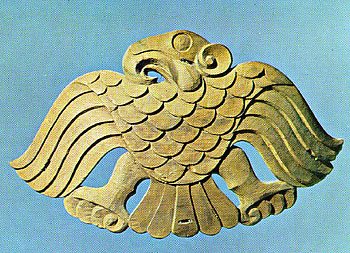
SYMBOL OF UYGHUR PEOPLE
